


[[ data.name ]]
[[ data.ticker ]]
[[ data.price ]] [[ data.change ]] ([[ data.changePercent ]]%)
Ниско: [[ data.low ]]
Високо: [[ data.high ]]
Цената на пшеницата на финансовия пазар
Пшеницата е една от най-съществените меки суровини в света, дълбоко вкоренена в глобалната земеделска икономика. Нейната цена, която се колебае поради различни фактори, играе ключова роля на финансовите пазари. Цените на пшеницата се определят до голяма степен от фючърсни договори на борси като Чикагската стокова борса (CBOT), като фючърсните договори за пшеница за месеци на доставка като март или юли често се цитират като бенчмаркове за пазара. Тези договори се смятат за важен барометър за глобалните ценови тенденции при пшеницата.
В Съединените щати пазарът на фючърси за пшеница в Чикаго е мястото, където се осъществява голяма част от търговската дейност, с цени, котирани в USD за бушел. Цените на пшеницата могат да варират значително от ден на ден поради промени в факторите на предлагане и търсене, както и по-широките икономически условия. Инвеститорите, търговците и фермерите внимателно следят тези пазари, разчитайки на графики за пшеницата и използвайки инструменти като калкулатор за цена на пшеницата за прогнозиране на пазарните движения.
Преглед на текущите тенденции в цената на пшеницата
Към края на 2024 г. цените на пшеницата показват забележителна волатилност, движена от няколко ключови фактора. Най-последните данни показват, че фючърсите на пшеница преживяват спад в стойността, с цени около $550 за бушел. Това бележи спад от близо 4,68% спрямо предходната година, въпреки че цените са подложени на краткосрочни колебания. Опасенията относно недостига на предлагане, включително лоши добиви от реколта в ключови производствени региони като САЩ и района на Черно море, повлияха на увеличението на цените от септември до октомври.
Въпреки че цените на пшеницата бяха преживели скок по-рано тази година поради неблагоприятно време и суши, те се стабилизираха, тъй като дъждовете в ключови региони като САЩ и Аржентина помогнаха да се облекчат опасенията за предлагането. Продължаващата геополитическа ситуация, особено по отношение на ролята на Русия на пазара на пшеница, също влияе върху цените, правейки ги susceptibles на неочаквани покачвания и спадове.
Текущи пазарни тенденции в цената на пшеницата
Пазарът на пшеница днес е оформен от няколко текущи тенденции. Една значителна тенденция е нарушаването на глобалната верига за доставки, причинено от изменението на климата и геополитическата нестабилност. Например, цените на пшеницата са били повлияни от неблагоприятни климатични условия като суши в основните производствени зони, особено в САЩ и Русия. В резултат на това са настъпили колебания в количеството налична пшеница, което се отразява в цените на фючърсните пазари.
Освен това, силата на щатския долар играе ключова роля в тенденциите на цените на пшеницата. По-силният долар може да направи американската пшеница по-скъпа за чуждестранните купувачи, намалявайки търсенето и потенциално водейки до спадове в цените. За разлика от това, по-слабият долар може да направи американската пшеница по-привлекателна на глобалния пазар, което може да повиши цените. Колебанията в обменните курсове, заедно с продължаващото търговско напрежение между основните страни износителки на пшеница, ще продължат да играят значителна роля в оформянето на пазара за пшеница.
Фактори, влияещи върху цената на пшеницата и пазара на пшеница
Има няколко фактора, допринасящи за ценовото движение на пшеницата и по-широкия пазар на пшеница. Сред най-важните са:
- Климатични условия: Като култура, силно повлияна от климатичните модели, цените на пшеницата са силно чувствителни към климатичните условия. Суши, прекомерни валежи и температури, отклоняващи се от нормата, могат да имат дълбоко въздействие върху добивите от реколта, което от своя страна влияе върху цените на пшеницата. Последните предизвикателства, като продължаващите суши в части от САЩ и Аржентина, са породили опасения за по-ниски добиви.
- Глобалното търсене и предлагане: Нарушенията в предлагането, като лоши реколти или логистични затруднения, могат да доведат до скокове в цените на пшеницата. Обратно, когато предлагането е обилно, цените могат да паднат. Освен това, глобалното търсене на пшеница, особено от развиващите се пазари, пряко влияе върху цените. Тъй като страни с нарастващо население и урбанизация изискват повече пшеница за производство на храни, цените имат тенденция да нарастват.
- Правителствени политики и субсидии: В основните страни производителки на пшеница, правителствените политики, включително субсидиите и митата, могат да имат значително въздействие върху цените на пшеницата. Тези политики могат или да стимулират производството, или да ограничат износа, като по този начин променят глобалното равновесие на предлагане и цени.
- Геополитически събития: Политическата нестабилност, особено в региони като Черно море и Близкия изток, може да причини значителни ценови колебания при пшеницата. Руската инвазия в Украйна, например, е имала значително въздействие върху глобалното предлагане на пшеница и цените, тъй като и двете страни са основни износители.
- Валутни колебания: Както беше споменато, силата на щатския долар може да повлияе на цените на пшеницата. По-силният долар може да направи пшеницата по-скъпа за чуждестранните купувачи, което може да доведе до намалено търсене и падащи цени. Валутните колебания също влияят върху цените на износа на пшеница, създавайки нестабилност на глобалния пазар.
Други свързани суровини, повлияни от движението на цената на пшеницата
Цената на пшеницата не съществува изолирано — много други земеделски и стокови пазари са тясно свързани с цените на пшеницата. Например, царевицата, ечемикът и другите зърнени культури често показват подобни ценови модели поради споделени екологични и икономически фактори. Когато цените на пшеницата се покачват, цените на другите зърнени могат също да се увеличат поради конкуренция за земя и ресурси.
По същия начин, цените на добитъка могат да бъдат повлияни от движенията на цените на пшеницата. Тъй като пшеницата е ключов компонент на фуража за животни, по-високите цени на пшеницата могат да доведат до увеличени разходи за отглеждане на добитък, което може да повиши цената на меса като говеждо, свинско и пилешко. Накрая, цените на енергията също могат да бъдат повлияни от движенията на цените на пшеницата. Пшеницата често се използва като биогориво, особено при производството на етанол, което свързва пазара на пшеница с енергийния пазар.
Стратегия за търговия с пшеница и прогнозиране на цените
Търговците, желаещи да навлязат на пазара на пшеница, трябва внимателно да разработят стратегия за търговия с пшеница, която отчита уникалната волатилност в сектора на земеделските суровини. Общите стратегии включват дълги или къси позиции в фючърсни договори за пшеница, в зависимост от това дали търговецът очаква цените да се покачат или паднат. Много използват технически анализ, анализирайки графики и модели за пшеница, заедно с фундаментален анализ за прогнозиране на бъдещи ценови движения.
Заключение
Пшеницата е критична суровина на глобалния пазар, повлияна от редица фактори — от климатичните условия до геополитическите събития. Колебливото естество на цените на пшеницата означава, че и фермерите, и търговците трябва да са проницателни при наблюдението на пазарните тенденции и адаптирането на стратегиите си съответно. Разбирането на тънкостите на тенденциите в цените на пшеницата, факторите, влияещи върху тях, и как те се свързват с другите суровини е от съществено значение за всеки, участващ в търговията с пшеница. Използването на инструменти като калкулатора за цена на пшеницата може да помогне за вземането на по-информирани решения при избор за покупка или продажба на пшеница.
За всеки, желаещ да участва на пазара на пшеница, поддържането на информираност за факторите, влияещи върху цените на пшеницата, е от решаващо значение. Чрез внимателно анализиране на пазара, използване на актуални прогнози за цената на пшеницата и вземане предвид на свързаните суровини, търговците могат да се позиционират за вземане на най-добрите решения в постоянно променящия се свят на земеделските суровини.
| Суап дълъг | [[ data.swapLong ]] точки |
|---|---|
| Суап къс | [[ data.swapShort ]] точки |
| Спред мин | [[ data.stats.minSpread ]] |
| Спред средно | [[ data.stats.avgSpread ]] |
| Мин. размер на договора | [[ data.minVolume ]] |
| Мин. стъпка на размера | [[ data.stepVolume ]] |
| Комисионна и суап | Комисионна и суап |
| Ливъридж | Ливъридж |
| Търговски часове | Търговски часове |
* Предоставените спредове отразяват претеглената във времето средна стойност. Въпреки че TradingMoon се стреми да предоставя конкурентни спредове през всички търговски часове, клиентите трябва да имат предвид, че те могат да варират и са подложени на основните пазарни условия. Горепосоченото е предоставено само за информационни цели. Клиентите се съветват да проверяват важните новинарски съобщения в нашия Икономически календар, което може да доведе до разширяване на спредовете, наред с други случаи.
Горепосочените спредове се прилагат при нормални търговски условия. TradingMoon си запазва правото да изменя горепосочените спредове в съответствие с пазарните условия съгласно „Условията и разпоредбите".
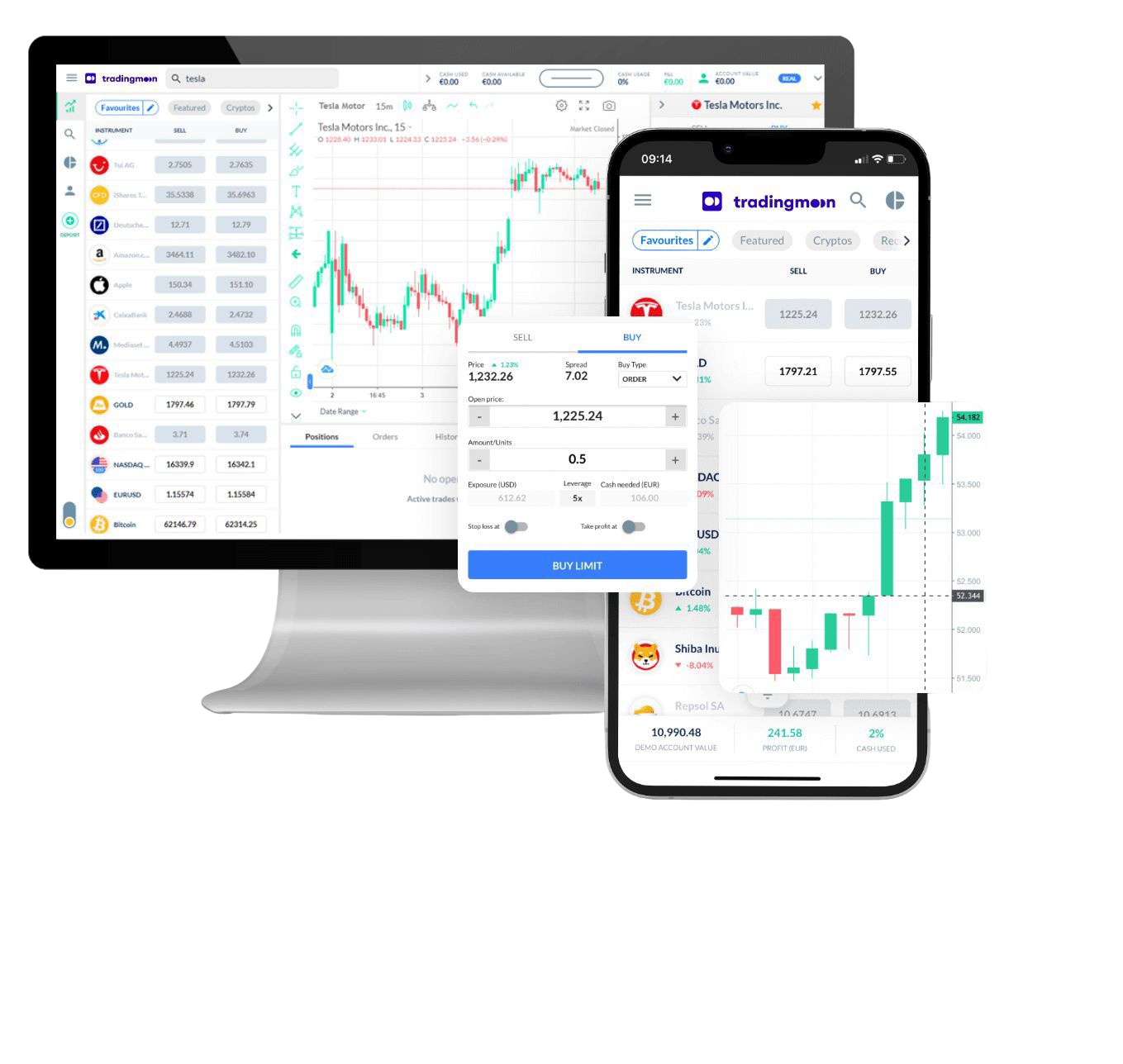
Търгувай [[data.name]] с TradingMoon
Заемете позиция в сектора на суровините! Диверсифицирайте с една единствена позиция.
- Търгувайте 24/5
- Тесни спредове
- Средно изпълнение за 5 мс
- Лесна за използване платформа
Защо да търгувате [[data.name]]
Възползвайте се максимално от ценовите колебания - независимо от посоката на движение на цената и без ограниченията, свързани с притежаването на базовия актив.
CFD
Реални суровини

Възползвайте се от покачващите се цени (заемете дълга позиция)


Възползвайте се от падащите цени (заемете къса позиция)

Търгувайте с ливъридж

Търгувайте върху волатилността

Без комисионни
Само ниски спредове

Управлявайте риска с вградени инструменти
Възможност за задаване на нива за вземане на печалба и стоп лос