


[[ data.name ]]
[[ data.ticker ]]
[[ data.price ]] [[ data.change ]] ([[ data.changePercent ]]%)
Low: [[ data.low ]]
High: [[ data.high ]]
BNB Price: Understanding Its Place in the Financial Market
BNB, formerly known as Binance Coin, is one of the largest cryptocurrencies by market capitalisation. Originally created as a utility token for discounted trading fees on the Binance exchange, it is now also the native token of BNB Chain, where it is used in decentralised finance (DeFi), blockchain gaming and other applications. In February 2022, Binance Coin was renamed BNB, which now stands for "Build and Build".
The Evolution of BNB in Finance
Since its launch during Binance's initial coin offering (ICO) in 2017, BNB has developed from a platform-specific token into a core part of the BNB Chain ecosystem. It powers BNB Smart Chain (BSC, formerly Binance Smart Chain), a blockchain that supports smart contracts and decentralised applications (dApps). This makes BNB relevant both to traders and to developers building on the network.
As digital assets are discussed more widely in traditional financial markets, BNB is often seen as a link between conventional finance and the blockchain economy. Its value is driven both by trading activity and by its use within the network.
Overview of BNB Price History
BNB's price can change quickly, and the live BNBUSD price is shown on this page. Its price history includes several milestones: BNB rose sharply during the crypto bull run of 2021 and reached a record above $1,300 in October 2025. Like other cryptocurrencies, it has also gone through sharp declines.
Key Price Milestones and Patterns
Like the wider crypto market, BNB has gone through both bearish and bullish cycles. Some traders use technical analysis of the BNB price chart, such as chart patterns and support and resistance levels, to inform their decisions, but past patterns don't guarantee future price movements.
BNB's supply is also reduced through regular token burns, which permanently remove part of BNB from circulation. A lower supply does not on its own mean a higher price: the effect depends on demand and wider market conditions.
Current BNB Market Trends
BNB operates in a fast-changing environment shaped by technological developments, market sentiment and regulatory changes. As a central part of the Binance and BNB Chain ecosystems, BNB's price is often linked to the activity and adoption of these platforms.
DeFi and BNB Smart Chain's Role
BNB Smart Chain (BSC) is one of the most widely used blockchains for DeFi applications, NFTs and gaming. Its typically lower transaction fees and faster processing times compared with Ethereum have attracted many projects and developers. BNB is used to pay gas fees and for staking on the network.
Demand for BNB is linked to the use of BSC-based dApps such as PancakeSwap and Venus. Within the Binance ecosystem, BNB can also be used for trading-fee discounts and in other Binance products.
Institutional Interest and Adoption
Institutional interest in cryptocurrencies has grown in recent years, and some investment firms and companies hold BNB as part of their crypto exposure. For some investors, BNB is a way to gain exposure to the Binance and BNB Chain ecosystems.
Factors Affecting the BNB Price
The price of BNB is influenced by various internal and external factors. Understanding them can help explain its price movements.
Internal Factors: Tokenomics and Burn Mechanism
BNB uses a quarterly Auto-Burn mechanism that permanently removes BNB from the total supply. The amount burned each quarter is calculated from BNB's price and the number of blocks produced on BNB Smart Chain, and the process runs independently of the Binance exchange. Part of the gas fees paid on BSC is also burned in real time.
BNB's total supply started at 200 million tokens. As of October 2026, after the 37th quarterly burn, it stood at around 131.5 million, and the long-term target is 100 million. A smaller supply makes BNB scarcer, but the impact on its price depends on demand.
External Factors: Regulation and Market Sentiment
Regulatory developments can affect BNB in both directions. Positive news, such as Binance's regulatory approvals in Dubai and France, can support investor confidence and market activity. Conversely, scrutiny from authorities in the U.S. and other regions can weigh on market sentiment.
Market sentiment also plays a significant role. During bullish crypto cycles, BNB often rises along with the wider market, while during bearish phases its price can fall sharply, as with other cryptocurrencies.
Broader Economic Factors
Like other cryptocurrencies, BNB is influenced by macroeconomic trends. Factors such as inflation rates, interest rate policies and geopolitical tensions can drive investors toward or away from digital assets.
Other Cryptocurrencies Affected by BNB's Price Action
BNB is one of the leading cryptocurrencies, and its price movements can affect a range of related tokens. BNB is closely tied to the Binance exchange, where it is used for trading-fee discounts and other services, so its price movements can also affect tokens linked to the Binance ecosystem. Binance's former stablecoin, Binance USD (BUSD), is no longer supported: Binance ended support for it in December 2023 after its issuer, Paxos, stopped minting new tokens.
Other altcoins closely related to BNB include tokens launched through Binance Launchpad and Launchpool, Binance's token launch platforms. These tokens, such as Axie Infinity (AXS) and Venus (XVS), can move together with BNB because of their connection to the Binance ecosystem. In addition, BNB's price action may affect DeFi projects built on BNB Smart Chain, such as PancakeSwap (CAKE) and Venus Protocol, because these platforms often use BNB for staking and liquidity provision.
BNB is also used as collateral on decentralised exchanges (DEXs) and lending platforms, so a significant change in its price can lead to adjustments in liquidity pools or loan-to-value ratios, which can affect related projects and wider market sentiment.
Conclusion: BNB in the Crypto Market
BNB plays a central role in the Binance and BNB Chain ecosystems, with uses ranging from trading-fee discounts to gas fees and staking. Its price is shaped by network activity, its burn mechanism, regulation and overall market sentiment, and like all cryptocurrencies it can be highly volatile.
Whether you're an experienced trader, a long-term market watcher studying BNB's price history or new to cryptocurrencies, it's important to stay informed and understand the risks before you trade.
| Swap long | [[ data.swapLong ]] points |
|---|---|
| Swap short | [[ data.swapShort ]] points |
| Spread min | [[ data.stats.minSpread ]] |
| Spread avg | [[ data.stats.avgSpread ]] |
| Min contract size | [[ data.minVolume ]] |
| Min step size | [[ data.stepVolume ]] |
| Commission and Swap | Commission and Swap |
| Leverage | Leverage |
| Trading Hours | Trading Hours |
* The spreads provided are a reflection of the time-weighted average. Though TradingMoon attempts to provide competitive spreads during all trading hours, clients should note that these may vary and are susceptible to underlying market conditions. The above is provided for indicative purposes only. Clients are advised to check important news announcements on our Economic Calendar, which may result in the widening of spreads, amongst other instances.
The above spreads are applicable under normal trading conditions. TradingMoon has the right to amend the above spreads according to market conditions as per the 'Terms and Conditions'.
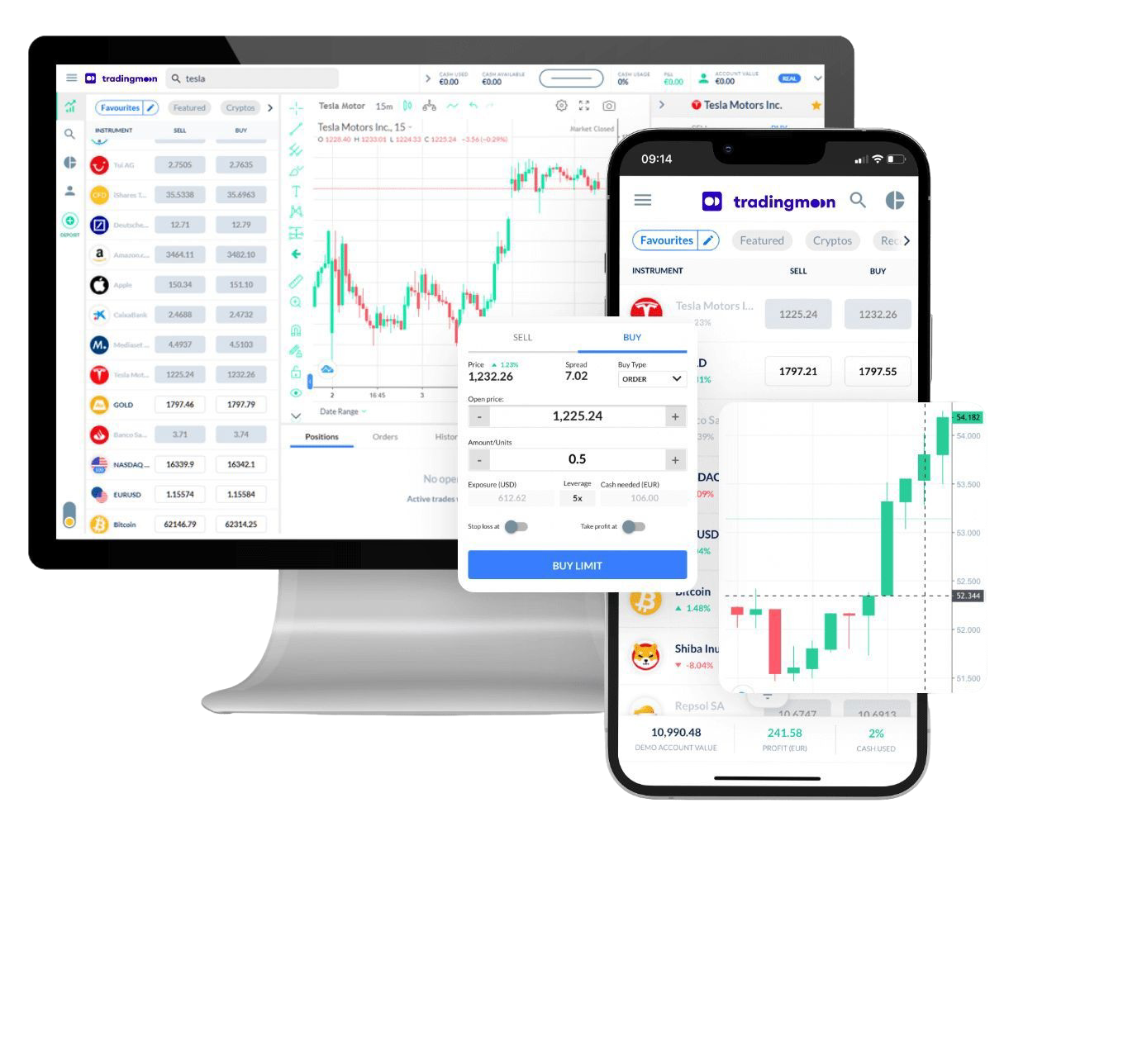
Trade [[data.name]] with TradingMoon
The most popular and trending cryptocurrencies, all in one place at the right time.
- Trade 24/7
- Minimum margin requirement below ~3$
- Spreads of just $0.50 on BTC - lower on other crypto! Plus a super low trading fee of 0.1%/side
- No withdrawal fees
- Diversify! 900+ instruments to choose from
FAQs
How to trade BNBUSD?
BNBUSD can be traded as a CFD with brokers that offer CFD trading, such as TradingMoon. A CFD lets you speculate on BNB's price movements without buying the coin itself. BNB is used to pay trading fees on the Binance exchange and as the gas token on BNB Chain.
When trading BNBUSD, it is important to monitor the BNB price, as it can fluctuate significantly. Leverage magnifies both profits and losses. Make sure you understand how BNBUSD CFDs work and the risks involved before you trade.
When was BNBUSD released?
BNB was launched in July 2017 through Binance's initial coin offering (ICO) and began trading shortly afterwards. It was originally called Binance Coin and was renamed BNB in February 2022. Binance itself was founded in 2017 and has since become one of the largest cryptocurrency exchanges in the world.
What could affect the BNBUSD price in the future?
No one can predict BNB's future price. Factors that may influence it include activity on Binance and BNB Chain, the quarterly Auto-Burn that reduces BNB's total supply, regulatory developments affecting Binance, and overall sentiment in the cryptocurrency market.
Cryptocurrency prices are highly volatile and can rise or fall sharply. Past performance is not a reliable indicator of future results.
Why Trade [[data.name]]
Make the most of price fluctuations - no matter what direction the price swings and without capital restrictions that come with buying the underlying crypto asset.
Crypto CFD
Physical Crypto

Capitalise on rising crypto prices (go long)


Capitalise on falling crypto prices (go short)

Trade with leverage
Hold larger positions than the cash you have at your disposal

Trade on volatility
No need to own the asset or have an exchange account

No exchange fees or complex storage costs
Just lower commissions in the form of spreads and a small taker-fee

Manage risk with in-platform tools
Ability to set take profit and stop loss levels