


[[ data.name ]]
[[ data.ticker ]]
[[ data.price ]] [[ data.change ]] ([[ data.changePercent ]]%)
Low: [[ data.low ]]
High: [[ data.high ]]
About
History
Why Trade?
About
History
Why Trade?
EUR/DKK is a currency pair that shows how many Danish kroner (DKK) are needed to buy one euro (EUR). For example, if the EUR/DKK rate is 7.46, one euro is worth 7.46 Danish kroner, and one Danish krone is worth about 0.13 euros.
The euro is the common currency of the eurozone. The Danish krone has been Denmark's currency since 1875. Denmark is a member of the EU but has an opt-out from adopting the euro, and Danish voters rejected the euro in a referendum in 2000. Instead, the krone takes part in the EU's Exchange Rate Mechanism II (ERM II).
Under ERM II, the krone has a central rate of DKK 7.46038 per euro and may fluctuate by up to 2.25% on either side of it. Danmarks Nationalbank, Denmark's central bank, keeps the krone stable against the euro through its interest rate decisions and currency market interventions. As a result, EUR/DKK usually moves within a much narrower range than most currency pairs.
Denmark has pursued a fixed exchange rate policy since 1982, first against the German mark and, from 1999, against the euro. The krone's central rate has not changed since January 1987, and since the euro was introduced, EUR/DKK has traded close to its central rate of 7.46038.
The peg has been tested several times. In early 2015, after the Swiss National Bank removed its cap on the Swiss franc on 15 January, large capital inflows put upward pressure on the krone. Danmarks Nationalbank responded by cutting interest rates four times in January and February 2015, lowering its rate on certificates of deposit to -0.75%, and by intervening heavily in the currency market. The pressure eased later that year.
Because of the fixed exchange rate policy, EUR/DKK is mainly influenced by Danmarks Nationalbank's interventions and interest rate decisions, the interest rate gap with the eurozone and changes in market confidence in the peg. Past performance is not a reliable indicator of future results.
Traders follow EUR/DKK mainly because of Denmark's fixed exchange rate policy. As the krone is kept close to its central rate against the euro, the pair usually shows low volatility, but it can react to central bank decisions, interest rate changes and periods of pressure on the peg. Even small price movements can lead to gains or losses, especially when trading with leverage. Companies with business in Denmark and the eurozone may also use the pair to hedge currency risk.
Other currency pairs that traders may consider include EUR/USD, GBP/USD, USD/JPY and AUD/USD. The choice of currency pair depends on factors such as liquidity, volatility and each trader's strategy and risk tolerance. It's important to research any currency pair carefully and understand the risks before trading.
| Swap long | [[ data.swapLong ]] points |
|---|---|
| Swap short | [[ data.swapShort ]] points |
| Spread min | [[ data.stats.minSpread ]] |
| Spread avg | [[ data.stats.avgSpread ]] |
| Min contract size | [[ data.minVolume ]] |
| Min step size | [[ data.stepVolume ]] |
| Commission and Swap | Commission and Swap |
| Leverage | Leverage |
| Trading Hours | Trading Hours |
* The spreads provided are a reflection of the time-weighted average. Though TradingMoon attempts to provide competitive spreads during all trading hours, clients should note that these may vary and are susceptible to underlying market conditions. The above is provided for indicative purposes only. Clients are advised to check important news announcements on our Economic Calendar, which may result in the widening of spreads, amongst other instances.
The above spreads are applicable under normal trading conditions. TradingMoon has the right to amend the above spreads according to market conditions as per the 'Terms and Conditions'.
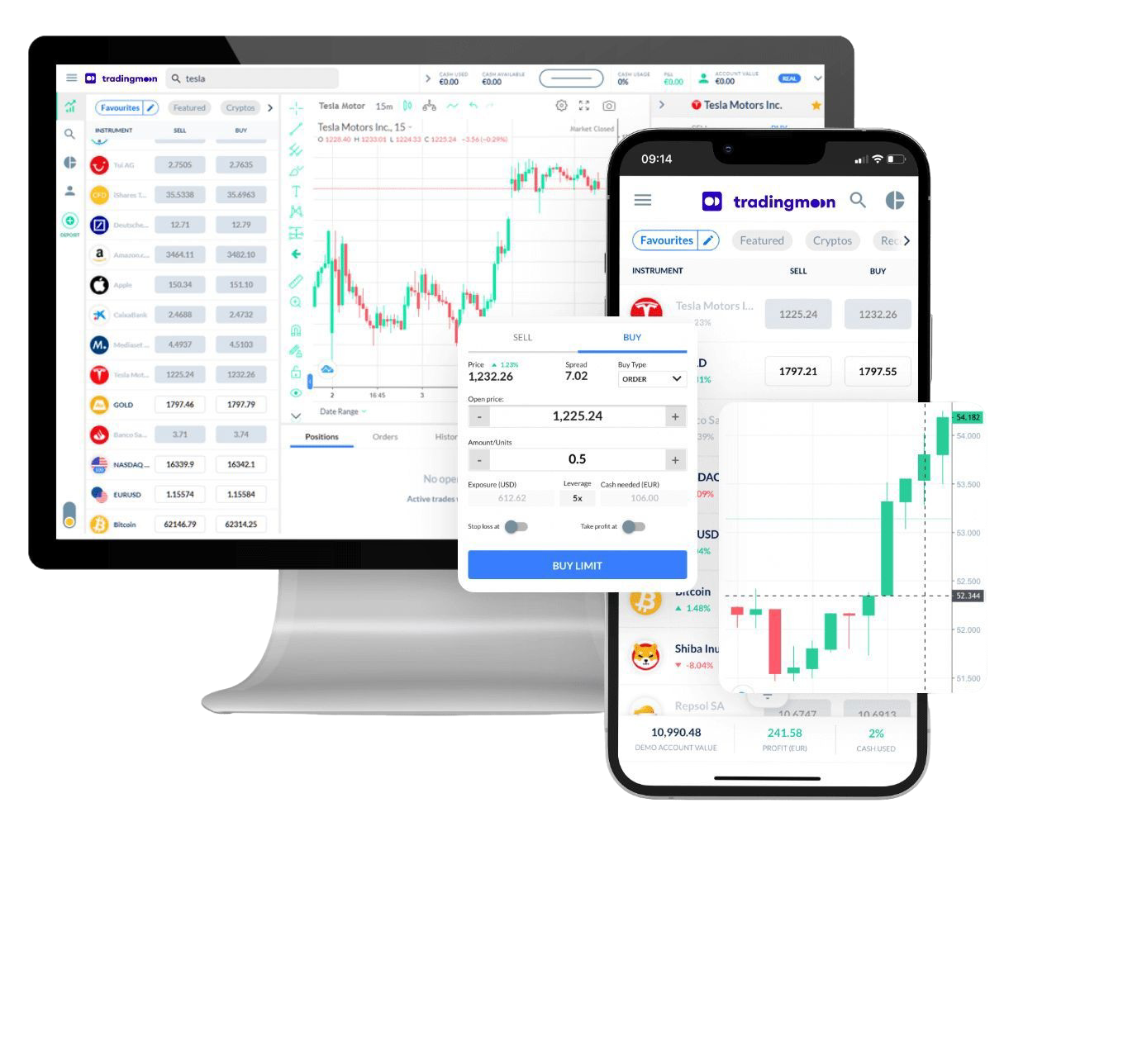
Trade [[data.name]] with TradingMoon
Hassle-free, with flexible trade sizes, and super low spreads!
- Spreads starting at 0.2!
- Average Execution at 5ms
- Easy to use platform
*Other fees may apply.
FAQs
What historical events have significantly impacted the EURDKK currency pair?
The EURDKK currency pair has been influenced by a variety of historical events. A crucial one was Denmark's decision in 1999 to peg the Krone to the Euro, which effectively established the exchange rate between these two currencies. This pegging decision has since anchored the value of the Krone, impacting the pair.
During the Eurozone debt crisis around 2009-2012, the pair experienced increased volatility as investors reacted to economic instability within the Eurozone. Furthermore, changes in key economic indicators such as GDP growth, inflation, and interest rates in either the Eurozone or Denmark have repeatedly caused shifts in the EURDKK value. Therefore, understanding the historical context is essential when trading this currency pair.
Why should I trade the EURDKK currency pair?
Trading the EURDKK currency pair may offer several benefits to informed traders and investors. As an exotic pair, it may provide opportunities for high returns if traded wisely. The Danish Krone's peg to the Euro also reduces extreme volatility, offering some level of stability compared to other exotic pairs.
This may make the EURDKK an appealing instrument for those looking to diversify their portfolio with some exposure to the European economy. However, it's important to note that understanding the complexities and nuances of this instrument is crucial before engaging in trading. Just like any other investment instrument, trading the currency pair comes with its own risks and rewards.
What strategies can traders use when dealing with the EURDKK currency pair?
Traders have a myriad of strategies at their disposal when trading the EURDKK pair. Due to the Krone's peg to the Euro, some may use arbitrage strategies, taking advantage of minor price discrepancies between this pair and others involving the Euro or Krone. Others might focus on macroeconomic analysis, considering factors like interest rate differentials, economic growth rates, and political stability in both the Eurozone and Denmark.
Technical analysis, using chart patterns and indicators, is another common approach. Ultimately, the best strategy depends on the trader's knowledge, risk tolerance, and market conditions.
Why Trade [[data.name]]
Make the most of price fluctuations - no matter what direction the price swings and with low capital investment.
Forex

Capitalise on rising prices (go long)


Capitalise on falling prices (go short)

Trade with leverage

Trade on volatility

Enjoy huge liquidity

Manage risk with in-platform tools
Ability to set take profit and stop loss levels