


[[ data.name ]]
[[ data.ticker ]]
[[ data.price ]] [[ data.change ]] ([[ data.changePercent ]]%)
Low: [[ data.low ]]
High: [[ data.high ]]
About
History
Competitors
About
History
Competitors
BlackRock is among the world’s largest asset management companies. Founded in 1988 and headquartered in New York, this financial institution had around $15.5 trillion in assets under management as of September 30, 2026. BlackRock was founded by a group of financial experts that included Larry Fink, Robert S. Kapito and Susan Wagner. Fink specifically had suffered the consequences of poor risk management practices and wanted to use this experience to set new standards with BlackRock. By 1989, BlackRock was profitable, and its assets had quadrupled to $2.7 billion.
Exponential growth continued over the next decade and, in 1999, BlackRock shares went on sale to the public. This started a period of public investment, organic growth and acquisitions. Today, BlackRock manages investments across a wide range of asset classes and industries, including the energy sector.
The BlackRock (BLK.US) share price history goes back to 1999 when the company went public. BlackRock shares were initially listed on the New York Stock Exchange at $14.
Since its IPO, the BlackRock share price has risen many times over its initial price of $14. Like any stock, it has also gone through periods of decline, and past performance is not a reliable indicator of future results.
Why trade BlackRock stock when there are other options? BlackRock stock has traditionally generated a lot of trading activity. With total revenue of $24.2 billion in 2025 and interests in dozens of industries, it’s among the leading investment management and risk management companies in the world. However, it’s not the only big name in asset management. Vanguard and State Street are also major names in the sector. Note that Vanguard is privately owned, so its shares are not publicly traded.
The sheer size of these companies makes them important to all aspects of the financial world, including trading. So, if you’re looking to trade shares in financial companies, BlackRock is one of the options available.
| Swap long | [[ data.swapLong ]] points |
|---|---|
| Swap short | [[ data.swapShort ]] points |
| Spread min | [[ data.stats.minSpread ]] |
| Spread avg | [[ data.stats.avgSpread ]] |
| Min contract size | [[ data.minVolume ]] |
| Min step size | [[ data.stepVolume ]] |
| Commission and Swap | Commission and Swap |
| Leverage | Leverage |
| Trading Hours | Trading Hours |
* The spreads provided are a reflection of the time-weighted average. Though TradingMoon attempts to provide competitive spreads during all trading hours, clients should note that these may vary and are susceptible to underlying market conditions. The above is provided for indicative purposes only. Clients are advised to check important news announcements on our Economic Calendar, which may result in the widening of spreads, amongst other instances.
The above spreads are applicable under normal trading conditions. TradingMoon has the right to amend the above spreads according to market conditions as per the 'Terms and Conditions'.
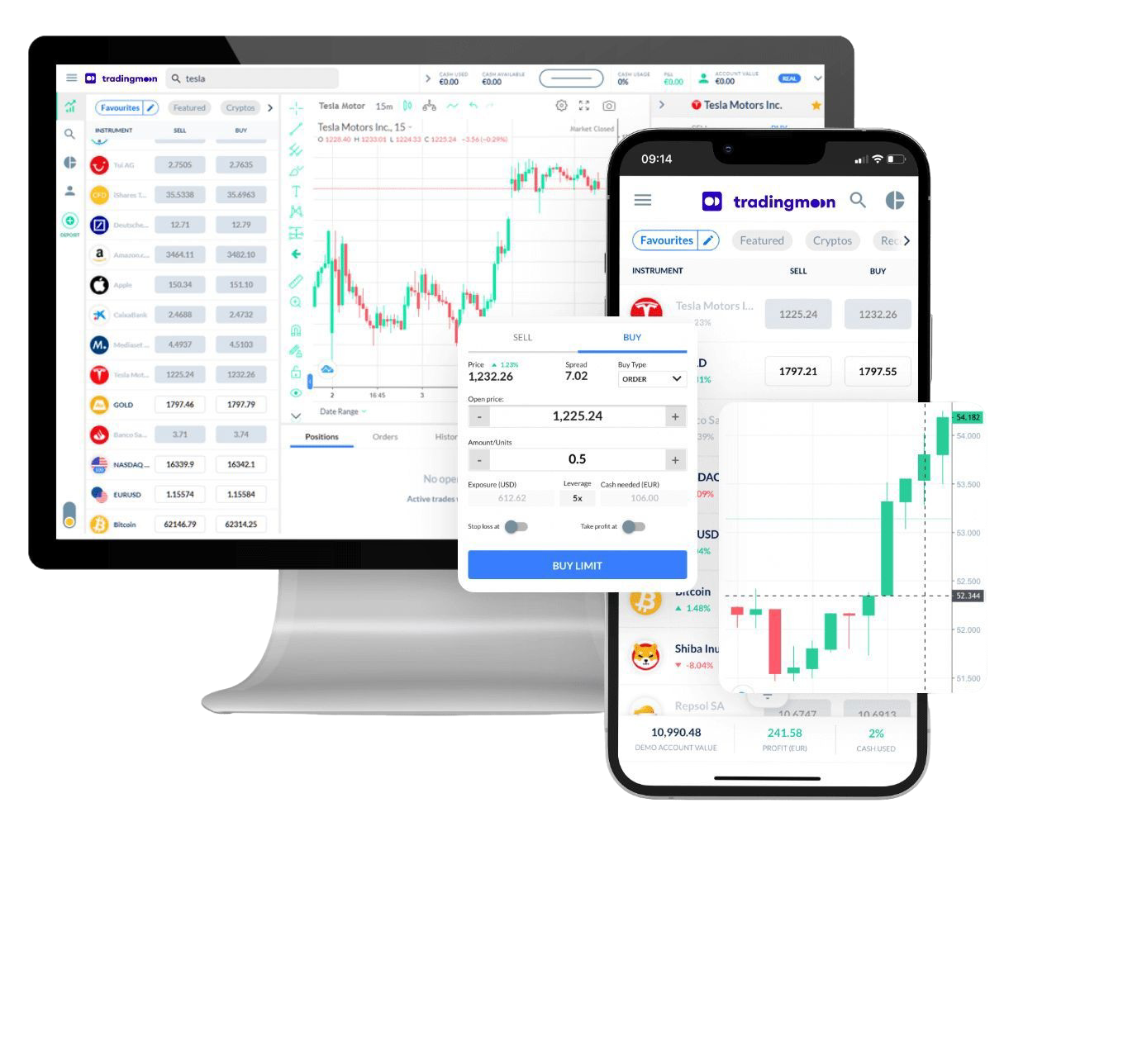
Trade [[data.name]] with TradingMoon
All Hassle-free, with flexible trade sizes and with zero commissions!*
- Trade 24/5
- Minimum margin requirements
- No commission, only spread
- Fractional shares available
- Easy to use platform
*Other fees may apply.
FAQs
What are the key drivers affecting BlackRock's stock price?
The key drivers affecting BlackRock's stock price involve several factors, including changes in the macroeconomic environment, changes in interest rates, and changes in the company’s own performance.
The macroeconomic environment is a major factor affecting BlackRock’s stock price. This includes economic indicators such as GDP growth, inflation, unemployment, and consumer confidence. If the economy is doing well, this could increase demand for BlackRock’s financial products, positively affecting the company’s stock price.
Changes in interest rates can also have a major effect on BlackRock’s stock price. Interest rates can impact the demand for BlackRock’s financial products, and changes in interest rates will affect the cost of borrowing money to operate its business.
Who owns most BlackRock shares?
BlackRock is a publicly traded company, which means that its shares are owned by many different people and entities. Large institutional investors, such as asset managers and investment funds, hold significant stakes, alongside individual and retail shareholders. BlackRock lists the shareholders that own more than 5% of its stock in its annual proxy statement.
Do BlackRock shares pay dividends?
Yes, BlackRock pays a quarterly cash dividend. In 2026, BlackRock declared a quarterly dividend of $5.73 per share. The dividend yield changes as the share price moves, and investors often compare it with the average for stocks in the SPX500 index.
Dividends are not guaranteed: the company can change, reduce or stop them at any time. It is therefore important to monitor BlackRock's financial performance and dividend announcements on a regular basis, as well as any other factors that may affect its payout. Ultimately, whether or not to invest in BlackRock based on its dividends is an individual decision that should be made after careful consideration of the company's financials and outlook.
Why Trade [[data.name]]
Make the most of price fluctuations - no matter what direction the price swings and without capital restrictions that come with buying the underlying asset.
CFDs
Equities

Capitalise on rising prices (go long)


Capitalise on falling prices (go short)

Trade with leverage
Hold larger positions than the cash you have at your disposal

Trade on volatility
No need to own the asset

No commissions
Just low spreads

Manage risk with in-platform tools
Ability to set take profit and stop loss levels