


[[ data.name ]]
[[ data.ticker ]]
[[ data.price ]] [[ data.change ]] ([[ data.changePercent ]]%)
Ниско: [[ data.low ]]
Високо: [[ data.high ]]
Обобщение на цените на алуминия
Обобщение на цените на алуминия
Преглед на пазара на алуминий: Фактори, търговски стратегии и свързани суровини
Алуминият, универсалният метал, известен със своите леки, устойчиви на корозия и рециклируеми свойства, играе ключова роля в различни индустрии, от строителството и автомобилния сектор до опаковането и аерокосмическата промишленост. Разбирането на динамиката на пазара на алуминий е от съществено значение както за бизнесите, разчитащи на метала, така и за инвеститорите, стремящи се да се възползват от ценовите му колебания. Това е изчерпателен преглед на пазара на алуминий, обхващащ ключови аспекти като ценови фактори, търговски стратегии и корелацията му с други значими суровини. Пазарът на алуминий е глобална екосистема със сложно взаимодействие на предлагане, търсене, геополитически фактори и технологични постижения. Китай е най-големият производител и потребител на алуминий в света, оказвайки значително влияние върху глобалните цени. Други основни играчи включват Русия, Канада и Индия. Търсенето на алуминий се движи предимно от секторите на строителството и транспорта. Тъй като нациите инвестират в развитие на инфраструктурата и глобалното търсене на автомобили, самолети и кораби нараства, необходимостта от алуминий вероятно ще се увеличи. Освен това, нарастващата популярност на електрическите превозни средства, които използват алуминий интензивно за компенсиране на теглото на батериите, е готова да увеличи допълнително търсенето в следващите години. От страна на предлагането, производството на алуминий е енергоемко, което прави разходите за електроенергия ключов фактор, влияещ върху рентабилността и нивата на производство. Следователно, колебанията в цените на енергията, по-специално на въглищата и природния газ, могат значително да повлияят на цените на алуминия. Освен това, геополитически събития като търговски войни, санкции и екологични разпоредби могат да нарушат веригите за доставки и да допринесат за ценова волатилност.
Цена на алуминия: Фактори, влияещи върху ценовите колебания
Разбирането на пазара на алуминий изисква разплитане на сложното взаимодействие на предлагане, търсене и макроикономически фактори, които оформят цената му. Динамика на предлагането:
- Производствени разходи: Енергията, по-специално електроенергията, представлява значителна част от производствените разходи на алуминия. Колебанията в цените на енергията, особено на въглищата и природния газ, пряко влияят върху цените на алуминия.
- Наличност на боксит: Бокситът, основният източник на алуминий, изпитва ценови колебания поради геополитически фактори, минни разпоредби и нарушения на веригата за доставки. Влиянието на Китай: Като най-голям производител и потребител на алуминий в света, нивата на производство на Китай и управлението на запасите значително влияят върху глобалното предлагане и ценовите тенденции. Детерминанти на търсенето:
- Глобален икономически растеж: Стабилният икономически растеж, особено на развиващите се пазари, подхранва търсенето на алуминий в секторите на строителството, развитието на инфраструктурата и производството.
- Тенденции в автомобилната индустрия: Автомобилната индустрия, с нарастващото си приемане на леки алуминиеви компоненти за горивна ефективност, остава основен двигател на търсенето на алуминий.
- Сектор на опаковките: Постоянното търсене на алуминиеви кутии и фолиа от сектора на опаковките допринася за общото потребление на метала. Макроикономически фактори:
- Валутни колебания: Тъй като алуминият се търгува глобално в щатски долари, колебанията в обменните курсове влияят върху цената му в местни валути, засягайки както вноса, така и износа.
- Лихвени проценти: Промените в лихвените проценти влияят върху разходите за заеми на производителите и инвеститорите, потенциално влияейки върху нивата на запасите от алуминий и ценовата волатилност.
- Геополитически събития: Търговски войни, санкции и политическа нестабилност могат да нарушат глобалните вериги за доставки, създавайки ценова волатилност на пазара на алуминий.
Участие на пазара на алуминий: Покупка и продажба на алуминий
Инвеститорите и бизнесите участват на пазара на алуминий чрез различни канали, всеки от които предлага отличителни предимства и съображения:Покупка на алуминий:
- Физически алуминий: Закупуването на физически алуминий, независимо дали под формата на слитъци, биле или други форми, осигурява материална собственост, но изисква съображения за съхранение и транспортиране.
- Фючърсни договори за алуминий: Тези договори, търгувани на стокови борси, позволяват на инвеститорите да спекулират с бъдещи цени на алуминия или да се хеджират срещу потенциални ценови рискове.
- ETF-и за алуминий: Борсово търгувани фондове (ETF), които проследяват цената на алуминия, предлагат на инвеститорите излагане на метала без сложностите на физическата собственост.
Продажба на алуминий:
- Физически продажби: Производители и бизнеси, притежаващи физически алуминий, могат да продадат запасите си чрез транзакции на спот пазара или дългосрочни договори.
- Късо продаване на фючърсния пазар: Търговци, очакващи спад на цените, могат да продадат фючърсни договори за алуминий, целейки да спечелят от ценовата разлика при обратното им изкупуване на по-ниска цена.
- Търговия с опции: Опционните договори предоставят правото, но не и задължението, да се продаде алуминий на предварително определена цена в рамките на определен срок, предлагайки гъвкавост при управлението на ценовия риск.
История на пазара на алуминий
Историята на пазара на алуминий е белязана от значими етапи: - Ранно откритие и висока стойност: Първоначално алуминият се смяташе за благороден метал поради сложността на извличането му от боксит. През 19-ти век той дори беше по-ценен от златото.
- Процесът на Хол-Еру: Изобретяването на процеса на Хол-Еру в края на 19-ти век революционизира производството на алуминий, правейки го значително по-евтино и достъпно.
- Растеж през 20-ти век: 20-ти век видя нарастване на търсенето на алуминий, движено от неговото използване в транспорта, строителството и опаковането.
- Възходът на рециклирането: Енергоемкото естество на производството на първичен алуминий доведе до бързото развитие на рециклирането на алуминий, което сега представлява значителна част от глобалното предлагане.
- Настоящи и бъдещи тенденции: Днес пазарът на алуминий се изправя пред предизвикателства като нестабилни цени на енергията и геополитически несигурности. Въпреки това, леката, издръжлива и рециклируема природа на метала го позиционира добре за бъдещ растеж, особено в производството на електрически превозни средства и технологиите за възобновяема енергия.
Търговия с алуминий:
Пазарът на алуминий предлага различни канали за търговия и инвестиции: - Фючърсни договори: Търгувани на борси като LME, фючърсните договори позволяват на участниците да купуват или продават предварително определено количество алуминий на определена цена и бъдеща дата.
- Опционни договори: Опциите предоставят правото, но не и задължението, да се купи или продаде алуминий на определена цена в рамките на определен срок.
- Борсово търгувани фондове (ETF): ETF-ите проследяват представянето на пазара на алуминий, предлагайки на инвеститорите излагане на цените на алуминия без пряко притежаване на физически алуминий.
- Физически алуминий: Промишлените потребители често купуват физически алуминий директно от производители или чрез посредници. Важни съображения за търговия с алуминий:
- Пазарна волатилност: Пазарът на алуминий е susceptibles на значителни ценови колебания поради обсъдените по-рано фактори. Търговците и инвеститорите трябва да разбират и управляват ефективно тази волатилност.
- Геополитически рискове: Нарушенията в глобалните вериги за доставки или промените в търговските политики могат значително да повлияят на цените на алуминия.
- Валутни колебания: Тъй като алуминият е оценен в щатски долари, търговците трябва да са наясно с движенията на валутните курсове.
- Фундаментален анализ: Оценката на факторите на предлагане и търсене, глобалните икономически показатели и геополитическите събития предоставя информация за потенциалните ценови тенденции.
- Технически анализ: Използването на графични модели, индикатори и осцилатори може да помогне за идентифициране на точките на влизане и излизане въз основа на исторически ценови движения.
- Управление на риска: Използването на поръчки за стоп-лос, размер на позициите и стратегии за диверсификация са от съществено значение за намаляване на потенциалните загуби и запазване на капитала.
Навигирането в сложностите на пазара на алуминий изисква изчерпателно разбиране на присъщата му динамика, влияещи фактори и взаимосвързаност с по-широкия стоков пейзаж. Чрез комбиниране на фундаментален и технически анализ, прилагане на ефективни стратегии за управление на риска и поддържане на информираност за глобалните икономически тенденции, инвеститорите и бизнесите могат да се позиционират за успех на този динамичен и постоянно развиващ се пазар.
Цена на алуминия и корелацията му с ключови суровини:
Цената на алуминия е неразривно свързана с цените на другите суровини, отразявайки взаимозависимостите в глобалната икономика. - Цена на златото (XAUUSD): Като благороден метал, често считан за актив-убежище, златото обикновено има ниска или дори отрицателна корелация с алуминия. По време на периоди на икономическа несигурност инвеститорите могат да се насочат към злато, повишавайки цената му, докато алуминият, разглеждан като по-рисков актив, може да намалее.
- Цена на среброто: Среброто, с двойната си роля като благороден и промишлен метал, често показва положителна корелация с алуминия.
- Цена на Brent суров петрол и Цена на WTI суров петрол: Производството на алуминий е енергоемко, така че нарастващите цени на петрола могат да увеличат производствените разходи и потенциално да повлияят на цените на алуминия. Следователно съществува умерена положителна корелация.
- Цена на природния газ: Подобно на петрола, природният газ е ключов енергиен източник за топилниците за алуминий. Съществува положителна корелация между цените на природния газ и цените на алуминия.
- Цена на паладия и Цена на платината: Въпреки че паладият и платината са благородни метали, те също имат значителни промишлени приложения, особено в автомобилната индустрия. Следователно техните цени често показват умерена положителна корелация с алуминия.
- Цена на цинка, Цена на никела, Цена на медта: Тези базови метали често показват силна положителна корелация с алуминия, тъй като се използват в подобни промишлени приложения и се влияят от подобни икономически фактори.
- Цена на въглеродните емисии: Алуминиевата индустрия е значителен емитент на парникови газове. Следователно по-високите цени на въглеродните емисии, често прилагани чрез системи за търговия с емисии, могат да увеличат производствените разходи на алуминия и да повлияят на цените.
- USD (Щатски долар): Както беше споменато по-рано, по-слабият щатски долар обикновено укрепва цените на алуминия поради увеличената достъпност за купувачи, използващи други валути. Обикновено съществува отрицателна корелация между USD и цените на алуминия.
| Суап дълъг | [[ data.swapLong ]] точки |
|---|---|
| Суап къс | [[ data.swapShort ]] точки |
| Спред мин | [[ data.stats.minSpread ]] |
| Спред средно | [[ data.stats.avgSpread ]] |
| Мин. размер на договора | [[ data.minVolume ]] |
| Мин. стъпка на размера | [[ data.stepVolume ]] |
| Комисионна и суап | Комисионна и суап |
| Ливъридж | Ливъридж |
| Търговски часове | Търговски часове |
* Предоставените спредове отразяват претеглената във времето средна стойност. Въпреки че TradingMoon се стреми да предоставя конкурентни спредове през всички търговски часове, клиентите трябва да имат предвид, че те могат да варират и са susceptibles на основните пазарни условия. Горепосоченото е предоставено само за информационни цели. Клиентите се съветват да проверяват важните новинарски съобщения в нашия Икономически календар, което може да доведе до разширяване на спредовете, наред с други случаи.
Горепосочените спредове се прилагат при нормални търговски условия. TradingMoon си запазва правото да изменя горепосочените спредове в съответствие с пазарните условия съгласно „Условията и разпоредбите".
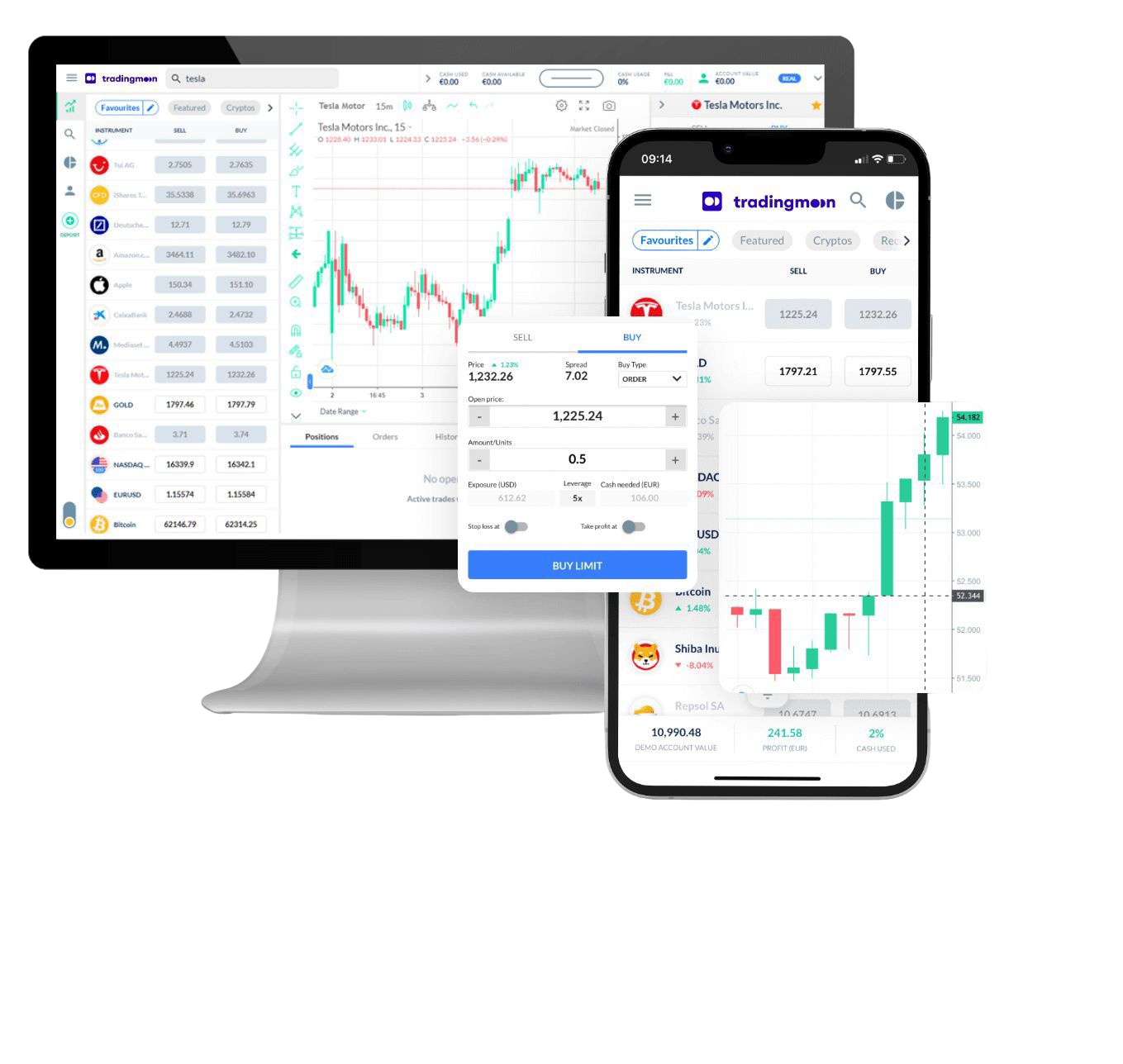
Търгувай [[data.name]] с TradingMoon
Заемете позиция в суровинния сектор! Диверсифицирайте с една единствена позиция.
- Търгувайте 24/5
- Тесни спредове
- Средно изпълнение за 5мс
- Лесна за използване платформа
Защо да търгувате [[data.name]]
Възползвайте се максимално от ценовите колебания - независимо от посоката на движение на цената и без ограниченията, свързани с притежаването на базовия актив.
CFD
Реални суровини

Възползвайте се от покачващите се цени (заемете дълга позиция)


Възползвайте се от падащите цени (заемете къса позиция)

Търгувайте с ливъридж

Търгувайте върху волатилността

Без комисионни
Само ниски спредове

Управлявайте риска с вградени инструменти
Възможност за задаване на нива за вземане на печалба и стоп лос