


[[ data.name ]]
[[ data.ticker ]]
[[ data.price ]] [[ data.change ]] ([[ data.changePercent ]]%)
Ниско: [[ data.low ]]
Високо: [[ data.high ]]
Общ преглед
Инвестиционни възможности
Търговски стратегии
Общ преглед
Инвестиционни възможности
Търговски стратегии
Златото е най-популярният благороден метал за търговия на стоковия пазар, както и за дългосрочно инвестиране. Инвеститорите обикновено купуват злато, за да диверсифицират риска, често чрез фючърсни договори и деривати. Пазарът на злато, подобно на другите пазари, преживява спекулации и волатилност. Въпреки това златото се е доказало като най-надеждното убежище в сравнение с другите благородни метали в много страни. Исторически златото е използвано като пари и е служило като стандарт за паричните еквиваленти, специфични за различни икономически региони или страни, до сравнително скоро. Много европейски страни възприемат златния стандарт в края на 19-ти век, макар че той временно е спрян по време на финансовите кризи на Първата световна война. След Втората световна война системата от Бретън Уудс обвързва американския долар със златото при курс от 35 долара за тройунция. Тази система просъществува до "шока на Никсън" през 1971 г., когато САЩ едностранно прекратяват директната конвертируемост на щатския долар в злато (XAUUSD), преминавайки към система с фиатна валута. Швейцарският франк е последната основна валута, която прекъсва връзката си със златото през 2000 г. От 1919 г. най-разпространеният бенчмарк за цената на златото е Лондонската златна фиксация - телефонна среща два пъти дневно на представители на пет фирми за търговия с кюлчета от Лондонския пазар на кюлчета. Освен това златото се търгува непрекъснато по света на база вътрешнодневната спот цена, извлечена от извънборсовите пазари за търговия със злато в световен мащаб (код "XAUUSD"). Таблицата по-долу показва цената на златото спрямо различни активи и ключови статистически данни на петгодишни интервали. Това предоставя подробен поглед върху представянето на златото спрямо други инвестиционни възможности във времето, подчертавайки ролята му на надеждно средство за съхранение на стойност и хедж срещу икономическа несигурност. Цената на златото е ключов индикатор за инвеститорите, които искат да съхранят богатството си и да се ориентират в сложностите на финансовия пейзаж.
Влияещи фактори
Динамика на търсенето и предлагането
Подобно на повечето стоки, цената на златото се определя от търсенето и предлагането, включително спекулативното търсене. Въпреки това, за разлика от повечето други стоки, факторите спестяване и изхвърляне играят по-голяма роля за цената му, отколкото потреблението. По-голямата част от някога добитото злато все още съществува в достъпни форми, като кюлчета и масово произведени бижута, които често имат малка стойност над теглото на чистото злато. Това означава, че златото остава почти толкова ликвидно, колкото кюлчетата, и може лесно да се върне отново на пазара на злато. В края на 2006 г. се изчислява, че цялото някога добито злато възлиза на 158 000 тона. Като се има предвид значителното количество злато, съхранявано над земята, в сравнение с годишното производство, цената на златото се влияе основно от промените в настроенията, засягащи пазарното търсене и предлагане в еднаква степен, а не от промените в годишното производство. Според Световния съвет по златото годишното производство от рудници през последните години е близо до 2500 тона. Около 2000 тона отиват за производство на бижута, за индустриални и стоматологични нужди, а около 500 тона отиват при инвеститорите на дребно и борсово търгуваните златни фондове.
Роля на централните банки
Централните банки и Международният валутен фонд играят значителна роля за влияние върху стойността на златото. В края на 2004 г. централните банки и официалните организации притежават 19% от цялото надземно злато като официални златни резерви. Десетгодишното Вашингтонско споразумение за златото (WAG), стартирало през септември 1999 г., ограничава продажбите на злато от неговите членове (Европа, Съединените щати, Япония, Австралия, Банката за международни разплащания и Международния валутен фонд) до по-малко от 400 тона годишно. През 2009 г. споразумението е удължено с пет години, с лимит от 500 тона годишно. Европейски централни банки, като Bank of England и Швейцарската национална банка, са ключови продавачи на злато през този период. През 2014 г. споразумението е удължено за още пет години при 400 тона годишно. През 2019 г. споразумението не е удължено отново.
Въпреки че централните банки обикновено не обявяват предварително покупките на злато, някои от тях, като Русия, изразяват интерес към увеличаване на своите златни резерви от края на 2005 г. В началото на 2006 г. Китай, който държи само 1,3% от резервите си в злато, обявява, че търси начини за подобряване на доходността на официалните си резерви. Някои "бикове" се надяват, че това показва, че Китай може да пренасочи повече от своите активи към злато, в съответствие с други централни банки. Китайските инвеститори започват да преследват инвестиции в злато като алтернатива на еврото по време на кризата в еврозоната през 2011 г., а Китай оттогава се превръща в най-големия потребител на злато в света от 2013 г. насам.
Макроикономически променливи
Цената на златото може да бъде повлияна от различни макроикономически променливи. Те включват цената на петрола, използването на количествени облекчения, движението на валутните курсове и възвръщаемостта на капиталовите пазари.
Хедж срещу финансов стрес
Златото, подобно на всички благородни метали, може да се използва като хедж срещу инфлация, дефлация или девалвация на валута, макар че ефективността му в това отношение е поставяна под въпрос. Исторически златото не се е доказало последователно като надежден хеджиращ инструмент. Уникална особеност на златото е, че то няма риск от неплащане, което го прави отделен клас актив във времена на финансов стрес.
Кюлчета злато Инвестирането в златни кюлчета е традиционен метод за придобиване на злато, като страни като Канада, Австрия, Лихтенщайн и Швейцария улесняват тяхната покупко-продажба чрез големи банки. Златните кюлчета се предлагат в различни размери, като стандартните за Европа 400 тройунции и кюлчета от 1 килограм. Докато златните кюлчета обикновено имат по-ниска ценова премия в сравнение с монетите, те носят по-висок риск от фалшифициране. Лондонският пазар на кюлчета осигурява проследима верига на съхранение за кюлчетата Good Delivery, което улеснява тяхната сигурна търговия.
Златни монети Златните монети са популярен начин за притежаване на злато, като цената им се определя на база тяхното чисто тегло плюс малка премия. Инвестиционните монети се предлагат в размери от 0,1 до 2 тройунции, като размерът от 1 унция е най-разпространен. Крюгерандът е най-широко държаната инвестиционна монета, а други популярни варианти включват австралийския Gold Nugget, австрийския Philharmoniker и американския Gold Eagle.
Златни кръгове (Gold Rounds) Златните кръгове приличат на монети, но нямат парична стойност. Те се предлагат в размери, подобни на монетите, и често имат по-ниски допълнителни разходи поради липсата на добавени метали за издръжливост. Това ги прави икономически изгоден вариант за тези, които искат да инвестират в злато.
Борсово търгувани продукти върху злато Борсово търгуваните продукти върху злато (ETP), като ETF и ETN, предлагат експозиция към цената на златото без нужда от съхранение на физически кюлчета. Първият златен ETF, Gold Bullion Securities, е стартиран през 2003 г., а SPDR Gold Shares е забележителен пример. Въпреки че ETP-тата опростяват инвестирането в злато, те носят рискове отвъд самата присъща стойност на благородния метал.
Златни сертификати Златните сертификати предоставят на инвеститорите начин да избегнат рисковете и разходите, свързани със съхранението на физическо злато. Банките издават сертификати за разпределено или неразпределено злато, като разпределените сертификати са свързани с конкретни номерирани кюлчета. Тези сертификати обаче носят собствен набор от рискове, които инвеститорите трябва да вземат предвид.
Златни сметки Златните сметки, предлагани от различни банки, позволяват на инвеститорите да купуват или продават злато по начин, подобен на чуждестранна валута. Тези сметки могат да бъдат разпределени (напълно резервирани) или неразпределени (обединени), с важни разлики в правата на титуляря на сметката върху златото. Разпределените сметки предоставят конкретна собственост върху физическо злато, докато неразпределените сметки представляват дял в общ пул от злато.
Деривати, CFD и залагания на спред Дериватите върху злато, включително фючърси и опции, се търгуват на различни борси по света. В САЩ фючърсите върху злато се търгуват предимно на New York Commodities Exchange. Докато дериватите предлагат ливъридж, те също увеличават риска от загуба на капитал, което ги прави инвестиционна опция с по-висок риск.
Компании за добив на злато Инвестирането в компании за добив на злато осигурява експозиция към цената на златото чрез акциите на компанията. Тези акции могат да бъдат волатилни поради фактори като оперативни проблеми, лошо управление и пазарни условия. Някои компании хеджират цената на златото, за да намалят волатилността, но това може също да повлияе на потенциалната възвръщаемост за инвеститорите.
Фундаментален анализ Фундаменталният анализ на пазара на злато включва цялостна оценка на макроикономическата среда. Ключовите фактори включват растежа на БВП, нивата на инфлация, лихвените проценти и цените на енергоносителите. Освен това анализирането на глобалната динамика на търсенето и предлагането на злато е от решаващо значение за разбирането на пазарното му поведение и потенциалните бъдещи тенденции.
Злато срещу акции Златото често се сравнява с акциите като форма на инвестиция. Акциите обикновено се разглеждат като инструмент за растеж, предлагащ потенциал за значителна възвръщаемост с течение на времето. За разлика от тях, златото се разглежда като средство за съхранение на стойност, осигуряващо стабилност и хедж срещу икономическа несигурност. Исторически акциите обикновено превъзхождат златото по резултати, като се възползват от стабилен политически климат и силни права на собственост, които насърчават растежа и рентабилността на бизнеса.
Използване на ливъридж Инвеститорите могат да използват ливъридж, за да увеличат позициите си в злато, като заемат средства срещу съществуващи активи, за да търгуват деривати върху злато или нехеджирани минни акции. Докато ливъриджът може да увеличи потенциалните печалби, той също така значително увеличава риска от загуба. Този подход изисква внимателно обмисляне и управление на риска, за да се избегнат съществени финансови затруднения.
| Суап дълъг | [[ data.swapLong ]] точки |
|---|---|
| Суап къс | [[ data.swapShort ]] точки |
| Спред мин | [[ data.stats.minSpread ]] |
| Спред средно | [[ data.stats.avgSpread ]] |
| Мин. размер на договора | [[ data.minVolume ]] |
| Мин. стъпка на размера | [[ data.stepVolume ]] |
| Комисионна и суап | Комисионна и суап |
| Ливъридж | Ливъридж |
| Търговски часове | Търговски часове |
* Посочените спредове представляват среднопретеглена стойност във времето. Въпреки че TradingMoon се стреми да предоставя конкурентни спредове през всички часове на търговия, клиентите следва да имат предвид, че те могат да варират и са зависими от текущите пазарни условия. Горепосоченото е предоставено само с индикативна цел. Препоръчваме на клиентите да проверяват важните новинарски съобщения в нашия Икономически календар, тъй като те могат да доведат до разширяване на спредовете, наред с други случаи.
Горепосочените спредове се прилагат при нормални условия на търговия. TradingMoon си запазва правото да променя горепосочените спредове съобразно пазарните условия съгласно 'Общите условия'.
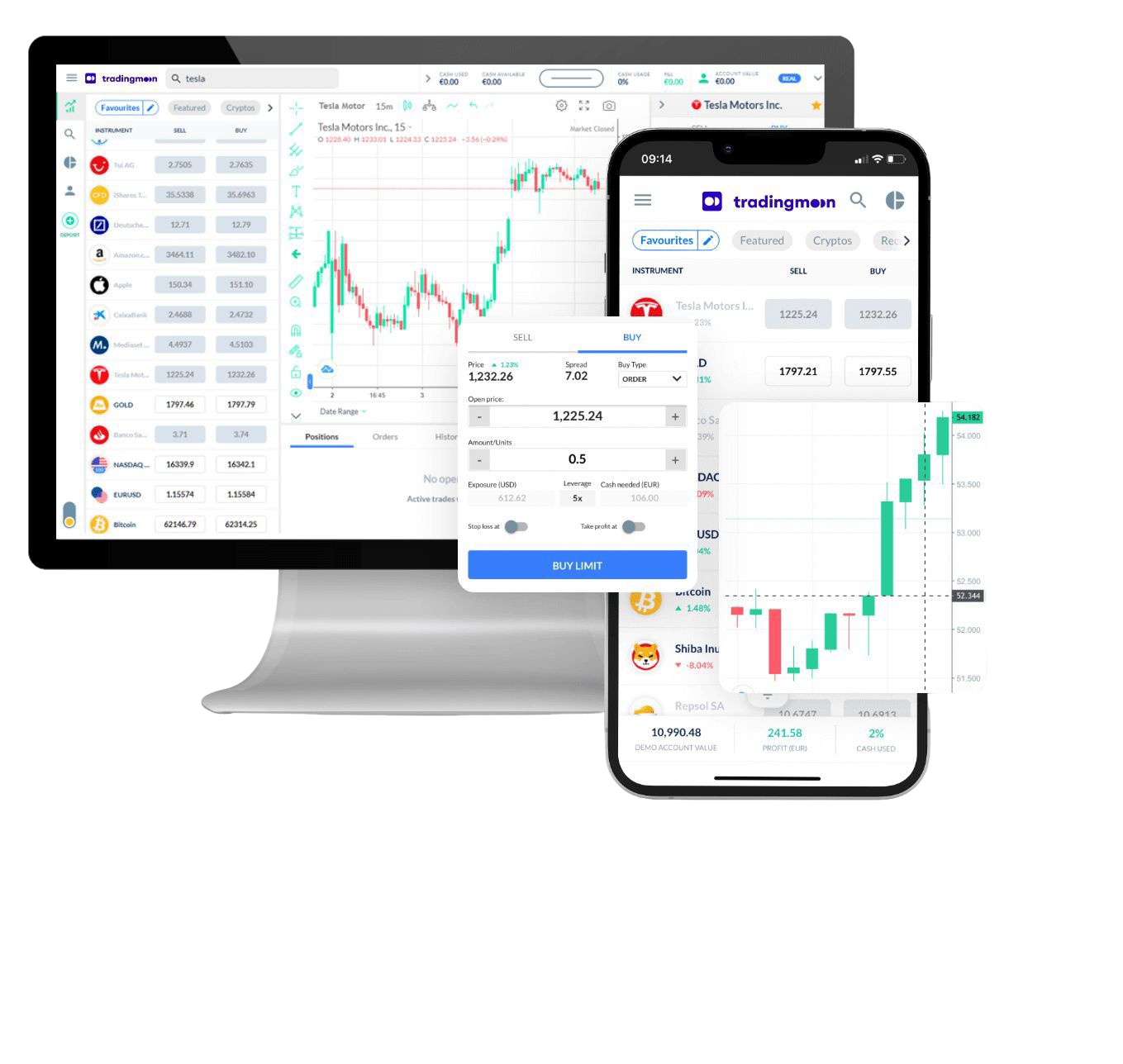
Търгувай [[data.name]] с TradingMoon
Заемете позиция в сектора на суровините! Диверсифицирайте с една единствена позиция.
- Търгувайте 24/5
- Тесни спредове
- Средно изпълнение за 5 мс
- Лесна за използване платформа
Защо да търгувате [[data.name]]
Възползвайте се максимално от ценовите колебания - независимо от посоката на движение на цената и без ограниченията, свързани с притежаването на базовия актив.
CFD
Реални суровини

Възползвайте се от покачващите се цени (заемете дълга позиция)


Възползвайте се от падащите цени (заемете къса позиция)

Търгувайте с ливъридж

Търгувайте върху волатилността

Без комисионни
Само ниски спредове

Управлявайте риска с вградени инструменти
Възможност за задаване на нива за вземане на печалба и стоп лос