


[[ data.name ]]
[[ data.ticker ]]
[[ data.price ]] [[ data.change ]] ([[ data.changePercent ]]%)
Low: [[ data.low ]]
High: [[ data.high ]]
About
History
Why trade?
About
History
Why trade?
EUR/NOK is a currency pair that shows how many Norwegian kroner (NOK) are needed to buy one euro (EUR). For example, if the EUR/NOK rate is 11.50, one euro is worth 11.50 kroner, so buying EUR 1,000 would cost NOK 11,500.
The euro is the common currency of the eurozone, and its monetary policy is set by the European Central Bank (ECB). The krone is the currency of Norway, where monetary policy is set by Norges Bank. Oil and gas are among Norway's main exports, so the krone is often sensitive to changes in energy prices.
The exchange rate is affected by factors such as ECB and Norges Bank interest rate decisions, inflation and growth data from Norway and the eurozone, oil and gas prices, and global risk sentiment. The krone is a much smaller currency than the euro, so EUR/NOK can move sharply when market conditions change.
The euro was introduced on 1 January 1999, and EUR/NOK has been traded since then. The Norwegian krone has floated since 10 December 1992, when Norway abandoned its fixed exchange rate during the European currency turmoil. In March 2001, Norway formally adopted an inflation target for monetary policy.
Oil prices have played a large part in the pair's history. The krone weakened when oil prices fell in 2014 and 2015. In March 2020, at the start of the COVID-19 pandemic, oil prices and global markets dropped sharply and the krone fell to a record low against the euro. Norges Bank said it was considering buying kroner in the market, a step it had not taken since 1999.
Interest rate differences between the eurozone and Norway, energy prices and global risk sentiment continue to drive EUR/NOK. Past performance is not a reliable indicator of future results.
Traders follow EUR/NOK because it pairs the euro with the currency of a major oil and gas exporter. Interest rate decisions by the ECB and Norges Bank, economic data from Norway and the eurozone, energy prices and changes in global risk sentiment can move the pair, sometimes sharply. These price movements can create trading opportunities, but they can also lead to losses, especially when trading with leverage.
EUR/NOK can be traded as a CFD (contract for difference), which lets you speculate on price movements in either direction without owning the underlying currencies. CFDs are leveraged products and carry a high level of risk.
Other currency pairs that traders may consider include EUR/USD, GBP/USD, USD/JPY and AUD/USD. The choice of currency pair depends on factors such as liquidity, volatility and each trader's strategy and risk tolerance. It's important to research any currency pair carefully and understand the risks before trading.
| Swap long | [[ data.swapLong ]] points |
|---|---|
| Swap short | [[ data.swapShort ]] points |
| Spread min | [[ data.stats.minSpread ]] |
| Spread avg | [[ data.stats.avgSpread ]] |
| Min contract size | [[ data.minVolume ]] |
| Min step size | [[ data.stepVolume ]] |
| Commission and Swap | Commission and Swap |
| Leverage | Leverage |
| Trading Hours | Trading Hours |
* The spreads provided are a reflection of the time-weighted average. Though TradingMoon attempts to provide competitive spreads during all trading hours, clients should note that these may vary and are susceptible to underlying market conditions. The above is provided for indicative purposes only. Clients are advised to check important news announcements on our Economic Calendar, which may result in the widening of spreads, amongst other instances.
The above spreads are applicable under normal trading conditions. TradingMoon has the right to amend the above spreads according to market conditions as per the 'Terms and Conditions'.
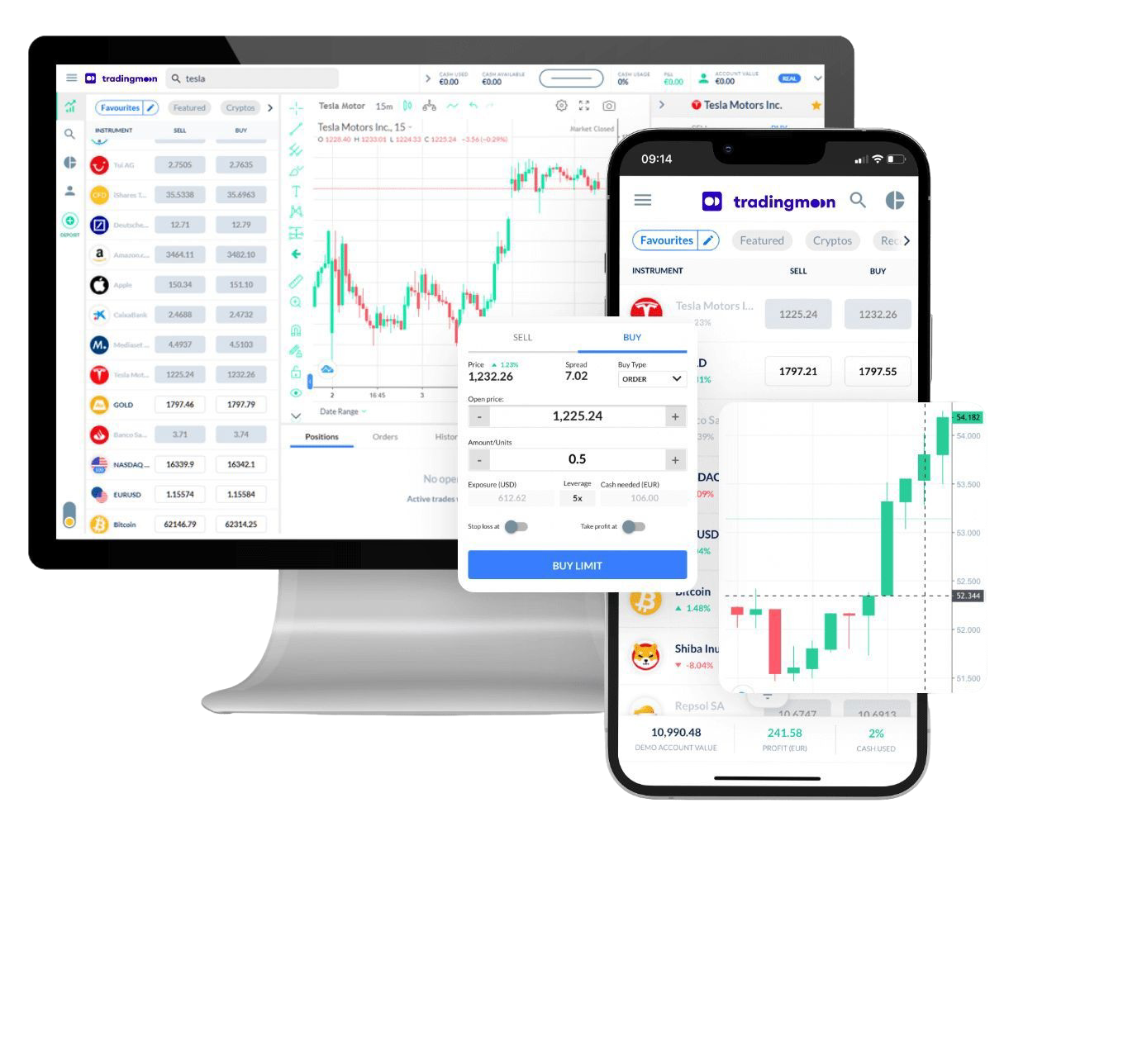
Trade [[data.name]] with TradingMoon
Hassle-free, with flexible trade sizes, and super low spreads!
- Spreads starting at 0.2!
- Average Execution at 5ms
- Easy to use platform
*Other fees may apply.
FAQs
What factors influence the EURNOK exchange rate?
The EURNOK exchange rate is influenced by both macro and microeconomic factors, such as global economic trends, political developments, market sentiment, and supply/demand dynamics. Global economic trends affect EURNOK volatility due to Norway's strong reliance on oil exports.
Changes in price of oil related commodities can significantly impact the Norwegian Krone (NOK) against the Euro (EUR). Political developments are also a major factor in EURNOK exchange rate fluctuations, as political instability or policy changes can cause investors to shift their portfolios and thus affect the currency exchange rate. Market sentiment is another important factor that affects the EURNOK exchange rate, as traders react to news events and speculation on future prices.
What is the best time to trade EURNOK?
EUR/NOK is a volatile currency pair, so there’s no one-size-fits-all answer to the question of when it’s best to trade. However, some general guidelines can help traders plan their trading. For instance, volatility tends to be higher during European hours, followed by North American trading hours and then the Asian session.
So traders may find it advantageous to focus their trades during peak trading times. Also, watching for major economic announcements related to the Eurozone and Norway can also be beneficial, as news-related events are likely to move the currency pair significantly. Finally, traders should always consider risk management when deciding which currencies and time frames they’d like to trade in.
What indicators can traders use when trading EUR/NOK?
When trading EUR/NOK, it's important to pay attention to a few key indicators, such as the Relative Strength Index (RSI), Moving Average Convergence Divergence (MACD), and the Bollinger Bands. The RSI is used to measure oversold and overbought conditions in the market and can be useful for finding entry points.
The MACD gives you insight into market momentum and can help you identify trends. Finally, the Bollinger Bands measure volatility in the market, helping traders to identify potential opportunities or risks. By keeping an eye on these indicators, you can better inform your trading decisions with EUR/NOK.
Why Trade [[data.name]]
Make the most of price fluctuations - no matter what direction the price swings and with low capital investment.
Forex

Capitalise on rising prices (go long)


Capitalise on falling prices (go short)

Trade with leverage

Trade on volatility

Enjoy huge liquidity

Manage risk with in-platform tools
Ability to set take profit and stop loss levels