


[[ data.name ]]
[[ data.ticker ]]
[[ data.price ]] [[ data.change ]] ([[ data.changePercent ]]%)
Low: [[ data.low ]]
High: [[ data.high ]]
About
History
Differences between Investing vs Trading
About
History
Differences between Investing vs Trading
UK 100 tracks the FTSE 100, the main stock market index in the UK. It is made up of the 100 largest companies listed on the London Stock Exchange (LSE) by market value. The index was launched in January 1984 with a starting value of 1,000 points.
The FTSE 100 is weighted by free-float market capitalisation, so larger companies have a bigger influence on its price. Its members include global groups in energy, banking, mining, healthcare and consumer goods, such as Shell, HSBC, AstraZeneca and Unilever. Because many of these companies earn much of their revenue abroad, the index is also influenced by the value of the British pound. The London Stock Exchange is open Monday to Friday, from 8:00 to 16:30 UK time.
The FTSE 100 has grown from 1,000 points in 1984, with long sideways periods and sharp falls along the way, including the dot-com crash, the 2008 financial crisis and the COVID-19 sell-off in 2020. It first passed 7,000 points in March 2015 and 8,000 points in February 2023. It then broke through 9,000 points in July 2025 and 10,000 points in January 2026, and went on to set new records in 2026.
The index can react to company results, commodity prices, Bank of England interest rate decisions, UK fiscal policy and changes in the value of the pound. Traders follow these events alongside price charts and technical indicators to analyse the market.
When you invest in FTSE 100 companies, for example by buying shares or an index fund, you own the underlying assets and may receive dividends. Trading UK 100 CFDs works differently: you don't own any shares, but trade on the index's price movements.
With CFDs, you can go long if you expect the price to rise or short if you expect it to fall, and a single trade gives you exposure to the whole index rather than one company. CFDs are leveraged products, so both profits and losses can be magnified.
| Swap long | [[ data.swapLong ]] points |
|---|---|
| Swap short | [[ data.swapShort ]] points |
| Spread min | [[ data.stats.minSpread ]] |
| Spread avg | [[ data.stats.avgSpread ]] |
| Min contract size | [[ data.minVolume ]] |
| Min step size | [[ data.stepVolume ]] |
| Commission and Swap | Commission and Swap |
| Leverage | Leverage |
| Trading Hours | Trading Hours |
* The spreads provided are a reflection of the time-weighted average. Though TradingMoon attempts to provide competitive spreads during all trading hours, clients should note that these may vary and are susceptible to underlying market conditions. The above is provided for indicative purposes only. Clients are advised to check important news announcements on our Economic Calendar, which may result in the widening of spreads, amongst other instances.
The above spreads are applicable under normal trading conditions. TradingMoon has the right to amend the above spreads according to market conditions as per the 'Terms and Conditions'.
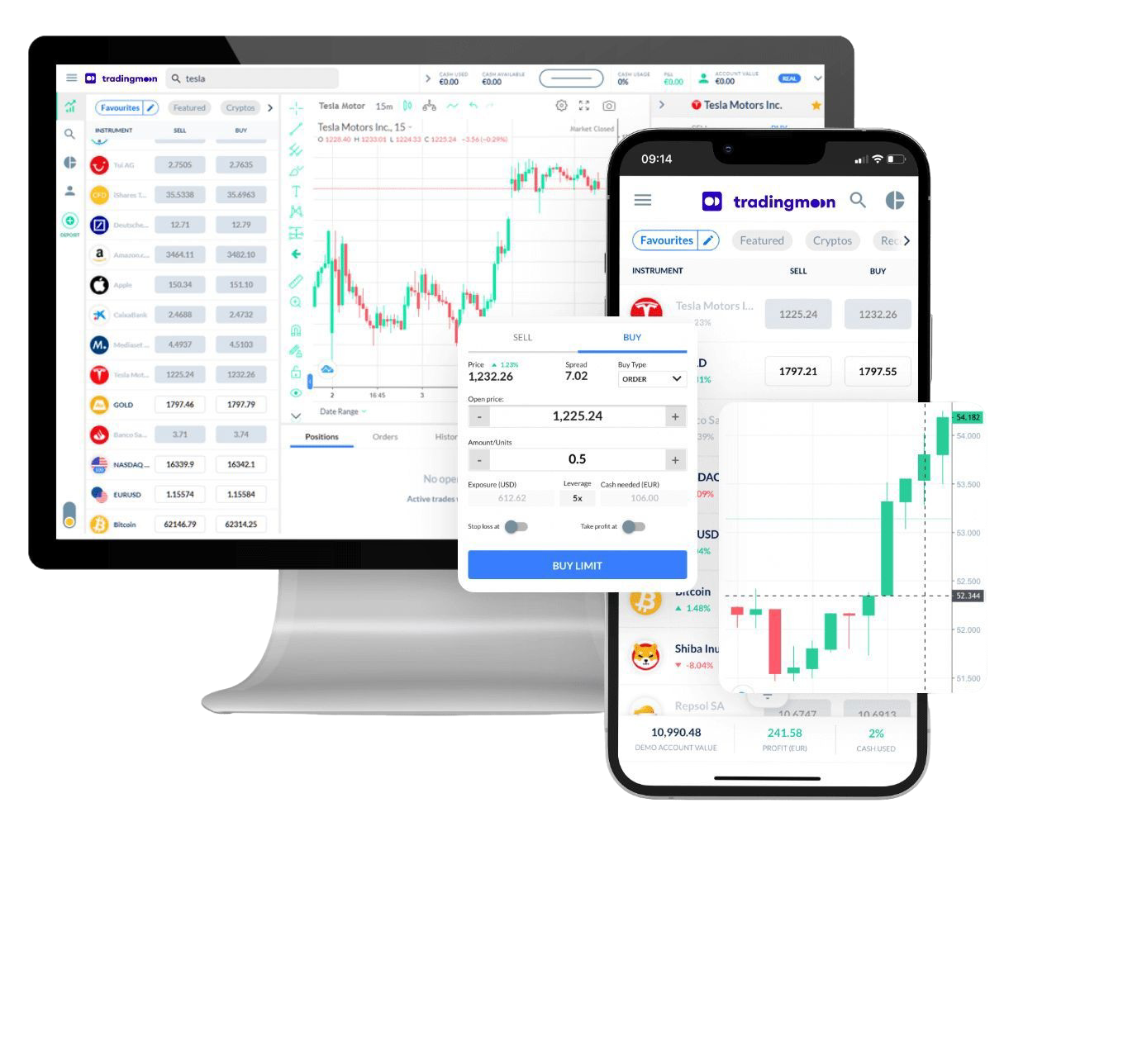
Trade [[data.name]] with TradingMoon
All major indices at industry-leading pricing.
Gain exposure to global markets via lower-risk, stock market indices.
- Trade 24/5
- Minimum margin requirements
- The tightest spreads
- Easy to use platform
Why Trade [[data.name]]
Make the most of price fluctuations - no matter what direction the price swings and without capital restrictions that come with buying the underlying asset.
CFDs
Indices

Capitalise on rising prices (go long)


Capitalise on falling prices (go short)

Trade with leverage
Hold larger positions than the cash you have at your disposal

Trade on volatility
No need to own the asset

No commissions
Just low spreads

Manage risk with in-platform tools
Ability to set take profit and stop loss levels