


[[ data.name ]]
[[ data.ticker ]]
[[ data.price ]] [[ data.change ]] ([[ data.changePercent ]]%)
Low: [[ data.low ]]
High: [[ data.high ]]
Cocoa price trends and insights
The global cocoa market plays a key role in the commodities sector, supplying industries ranging from chocolate manufacturing to cosmetics. Cocoa prices are closely watched by traders and the wider industry because they can move sharply on supply and demand imbalances, weather and geopolitical events.
Cocoa in the financial markets
Cocoa is traded on major exchanges, such as ICE in New York and London. Cocoa futures are used both to hedge price risk and to speculate on price movements.
Côte d'Ivoire and Ghana together produce more than half of the world's cocoa, so weather, disease and policy changes in West Africa can have a big impact on global prices.
Recent price history
In 2024, poor harvests in West Africa and falling inventories pushed cocoa futures to record highs, with prices peaking at close to $13,000 per tonne in late 2024. High prices then weighed on demand, while supply started to recover in West Africa and other producing countries, such as Ecuador. In 2025, cocoa recorded its sharpest annual fall on record, and prices continued to fall in 2026.
This boom-and-bust cycle shows how quickly cocoa prices can change when supply and demand shift.
Seasonal influences
West Africa has two cocoa harvests: the main crop, from around October to March, and the smaller mid-crop, from around April to September. Harvest progress and port arrivals are closely watched, as they give an early indication of supply.
Factors that affect cocoa prices
1. Weather and climate
Cocoa is highly sensitive to weather. Droughts, heavy rainfall and the Harmattan, a dry and dusty seasonal wind in West Africa, can all reduce yields.
2. Pests and diseases
Diseases such as cocoa swollen shoot virus and black pod can destroy trees and reduce output for several seasons.
3. Trade and government policy
Export rules, the farmgate prices set by governments in Côte d'Ivoire and Ghana, and regulations such as the EU's deforestation rules can all affect supply and costs.
4. Speculation
Large positions in the futures market can amplify price swings, especially when supply is tight.
5. Demand
Chocolate demand, particularly in emerging markets, supports long-term consumption. Very high prices can also reduce demand, as manufacturers change recipes and consumers buy less.
Related commodities
Cocoa prices can affect other ingredients used in confectionery. Sugar and dairy products are both used in chocolate, so changes in chocolate production can affect demand for them. Nuts and vanilla can also be affected when manufacturers change their recipes to manage cocoa costs.
What traders watch
Traders following the cocoa market often keep an eye on:
- Harvest and port arrival data from Côte d'Ivoire and Ghana
- Quarterly grindings data from Europe, Asia and North America, which indicate demand
- Cocoa inventories in exchange warehouses
- Weather forecasts for West Africa
Cocoa CFDs let you trade on cocoa price movements without owning the underlying commodity. CFDs are leveraged products, so both profits and losses can be magnified.
| Swap long | [[ data.swapLong ]] points |
|---|---|
| Swap short | [[ data.swapShort ]] points |
| Spread min | [[ data.stats.minSpread ]] |
| Spread avg | [[ data.stats.avgSpread ]] |
| Min contract size | [[ data.minVolume ]] |
| Min step size | [[ data.stepVolume ]] |
| Commission and Swap | Commission and Swap |
| Leverage | Leverage |
| Trading Hours | Trading Hours |
* The spreads provided are a reflection of the time-weighted average. Though TradingMoon attempts to provide competitive spreads during all trading hours, clients should note that these may vary and are susceptible to underlying market conditions. The above is provided for indicative purposes only. Clients are advised to check important news announcements on our Economic Calendar, which may result in the widening of spreads, amongst other instances.
The above spreads are applicable under normal trading conditions. TradingMoon has the right to amend the above spreads according to market conditions as per the 'Terms and Conditions'.
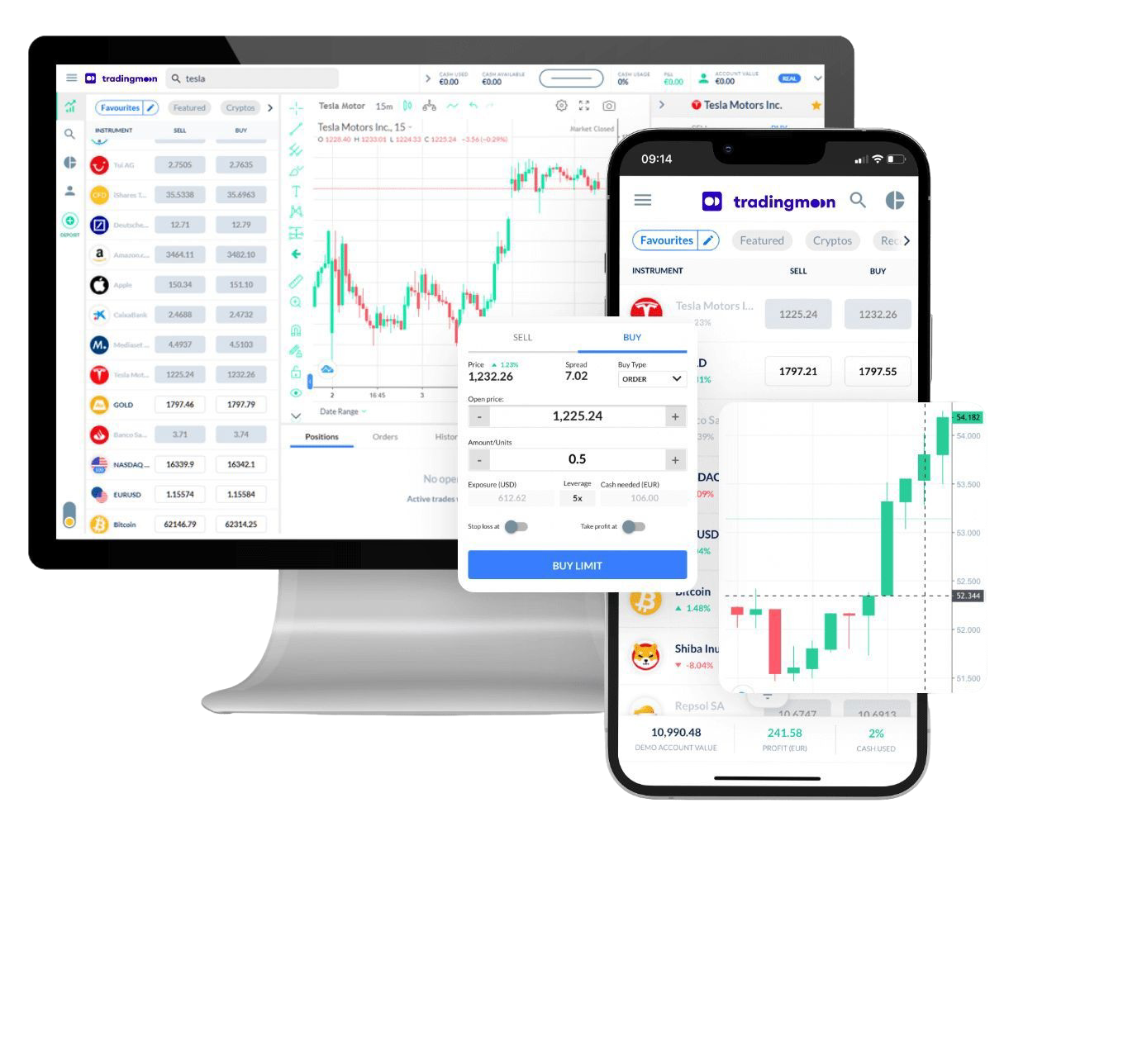
Trade [[data.name]] with TradingMoon
Take a view on the commodity sector! Diversify with a single position.
- Trade 24/5
- Tight spreads
- Average Execution at 5ms
- Easy to use platform
FAQs
What affects Cocoa prices?
Cocoa prices are heavily impacted by market events, such as demand and supply trends in the global cocoa market. In addition, historical events can also impact cocoa prices; for example, if there was a particularly bad harvest season in a major cocoa-producing region, this could cause price changes.
As with any commodity, it is important to keep an eye on the market and be aware of any major events or news that can affect cocoa prices. Traders should use historical data to help inform their trading decisions, while also analyzing current market trends to anticipate future prices. Being informed could help traders make sound decisions when trading cocoa.
How to trade Cocoa CFD
Trading Cocoa CFD requires a few simple steps. Firstly, open a trading account with TradingMoon. This will involve providing us with personal information to identify and verify yourself as the owner of the account. After this, you'll need to deposit funds into your account in order to begin trading.
Once you've opened and funded your account, you can start trading Cocoa CFD. To do this, simply select the “Cocoa” asset from our list of markets and enter a buy or sell order using the our platforms. You will need to specify how much of the asset you want to trade, as well as your desired “take profit” and “stop loss” points. Once you have set up your order, simply click on the “Place Order” button to submit it.
At this point, you can monitor your trades and make adjustments to them as needed. If the market moves in your favour, then you should consider taking profits at your “take profit” point. Likewise, if the market moves against you, then you should consider closing out your position at your “stop loss” to limit any losses.
What are the other options for trading Cocoa?
One such alternative is investing in companies that rely heavily on cocoa but do not directly trade in it. These companies may include chocolate manufacturers, cocoa processors, or other companies that use the commodity in their production process.
By investing in these firms, investors can benefit from the price fluctuations without having to directly buy and sell cocoa stocks. Additionally, many of these firms offer compelling dividend yields and have a long history of consistent performance. For those looking for an alternative investment option with a lower risk profile, investing in cocoa-dependent companies is a great place to start.
Investing in cocoa stocks can be a lucrative endeavour when done correctly. However, it’s important to remain aware of the risks associated with this type of investment. Before jumping into the market always remember to do your due diligence and research every company you plan to invest in. Doing so will help ensure that you make the most informed decision possible when investing in cocoa stocks or other alternatives.
Why Trade [[data.name]]
Make the most of price fluctuations - no matter what direction the price swings and without the restrictions that come with owning the underlying asset.
CFD
Actual Commodities

Capitalise on rising prices (go long)


Capitalise on falling prices (go short)

Trade with leverage

Trade on volatility

No commissions
Just low spreads

Manage risk with in-platform tools
Ability to set take profit and stop loss levels