


[[ data.name ]]
[[ data.ticker ]]
[[ data.price ]] [[ data.change ]] ([[ data.changePercent ]]%)
Ниско: [[ data.low ]]
Високо: [[ data.high ]]
Тенденции и анализ на цените на какао: Изчерпателен анализ
Глобалният пазар на какао играе ключова роля в сектора на суровините, служейки като гръбнак на индустрии, вариращи от производство на шоколад до козметични продукти. Цените на какаото се следят отблизо от трейдъри, инвеститори и участници в индустрията поради значителните им колебания, движени от дисбаланси между търсенето и предлагането, климатични фактори и геополитически влияния. През 2024 г. цените на какаото нараснаха до рекордни нива, отразявайки глобалните предизвикателства в доставките. Тази статия разглежда динамиката на цените на какаото, пазарните тенденции и факторите, влияещи върху тази съществена суровина. Също така разглеждаме как какаото взаимодейства със свързани суровини и предоставяме приложими прозрения за трейдъри и анализатори.
Цената на какаото на финансовия пазар
Значимостта на какаото на финансовия пазар произтича от ролята му като търгувана суровина на основни борси, като Intercontinental Exchange (ICE). Фючърсите на какао позволяват на трейдърите да хеджират рискове и да спекулират върху ценовите движения, правейки какаото привлекателен актив на волатилни пазари. В началото на 2024 г. цените на какаото в Ню Йорк и Лондон отбелязаха значителни увеличения, с годишен ценови ръст от 67% и 84% съответно. Този скок се дължи на ограничените доставки от основни производители като Кот д'Ивоар и Гана, които представляват над 60% от световното производство на какао. Климатичните смущения и геополитическите напрежения допълнително затегнаха производството. За трейдърите какаото представлява възможност за диверсификация на портфолиото. Инструменти като калкулатор за цената на какаото позволяват на пазарните участници да оценят потенциалните печалби, докато фючърсните договори предоставят механизми за намаляване на рисковете на нестабилен пазар.
Текущи пазарни тенденции при какаото
Рекордни върхове през 2024 г.
Пазарът на какао преживява в момента един от най-волатилните си периоди. Цените достигнаха многодесетилетни върхове през 2024 г. поради намалените добиви и изчерпаните запаси. Основните движещи фактори включват:
- Недостиг на доставки от Западна Африка : Пристигането на какао на пристанищата на Кот д'Ивоар спадна с 34%, докато Гана отчете спад от 35% в оценените и запечатани покупки.
- Стеснени запаси : Наличностите в Европа и Северна Америка значително намаляха, засилвайки конкуренцията за налично какао.
- Нарастващо търсене : Глобалното потребление на шоколад, особено на развиващите се пазари, продължава да расте, оказвайки натиск върху ограничените доставки.
Сезонни влияния
Сезонността играе значителна роля при цените на какаото. Периодите на реколта в Западна Африка обикновено водят до спад в цените, докато извън сезона цените се покачват. За трейдърите стратегическото планиране е от съществено значение, с възможности за покупка на какао по време на излишък от реколта и продажба по време на недостиг.
Фактори, влияещи върху цените на какаото и пазара на какао
Разбирането на факторите, влияещи върху цените на какаото, е от съществено значение за прогнозиране на пазарните тенденции и вземане на информирани търговски решения.
1. Климатични и екологични фактори
Какаото е силно чувствително към метеорологичните условия. Продължителните суши или прекомерните валежи могат да нарушат производството. В Западна Африка ветровете Харматтан — сух, прашен сезонен вятър — често влияят върху добивите на какао.
2. Вредители и болести
Болести като Какаовия вирус на набъбналите издънки опустошиха реколтите през последните години, допълнително намалявайки производството. Производителите се изправят пред значителни предизвикателства при намаляването на тези заплахи.
3. Икономически и търговски политики
Митата, експортните разпоредби и търговските споразумения значително влияят върху ценообразуването на какаото. Например, по-строгите политики на ЕС срещу обезлесяването наложиха допълнителни разходи за съответствие върху износителите.
4. Спекулативна търговия
Спекулантите на пазара на фючърси могат да усилят ценовите колебания. Мащабните покупки или разпродажби създават волатилност, правейки наблюдението на търговските модели от съществено значение. Разработването на стратегия за търговия с какао, която отчита тези колебания, е от ключово значение за успеха.
5. Дългосрочен ръст на търсенето
Тъй като развиващите се пазари увеличават потреблението си на шоколад и продукти на основата на какао, глобалното търсене продължава да надвишава предлагането. Тази устойчива тенденция на растеж влияе върху траекторията на ценообразуването на какаото.
Други свързани суровини, засегнати от движението на цените на какаото
Пазарът на какао има вторични ефекти върху няколко свързани суровини, особено тези, включени в производството на сладкарски изделия.
Захар
Цените на какаото и захарта често са взаимосвързани поради общата им роля в производството на шоколад. Покачващите се цени на какаото могат да доведат до увеличени разходи за продукти на захарна основа, влияейки върху търсенето на захар.
Млечни продукти
Млечният прах и другите млечни съставки, използвани в шоколада, също са засегнати. По-високите цени на какаото могат да доведат до по-скъп шоколад, влияейки върху потребителското търсене и пазара на млечни продукти.
Ядки и ванилия
Нишови суровини като бадеми, лешници и ванилия изпитват вторични ефекти. Производителите на шоколад могат да променят рецептурите на продуктите, за да компенсират нарастващите разходи за какао, влияейки върху динамиката на търсенето и предлагането на тези съставки. Чрез използване на инструменти за прогнозиране на цените на какаото, трейдърите могат по-добре да предвидят тези взаимозависимости и да планират инвестициите си съответно.
Изграждане на стабилна стратегия за търговия с какао
Навигирането на пазара на какао изисква обмислен подход. По-долу са представени някои приложими съвети за разработване на ефективна стратегия за търговия с какао:
1. Анализирайте историческите тенденции
Разглеждането на историята на какаото може да предостави ценни прозрения за повтарящи се модели. Сезонните колебания, геополитическите събития и историческите ценови върхове са полезни индикатори за предвиждане на бъдещи движения.
2. Използвайте пазарни инструменти
Използвайте аналитични платформи и калкулатори за оценка на потенциални търговски сценарии. Инструменти като калкулатор за цената на какаото могат да помогнат за количествено определяне на рисковете и възможностите.
3. Диверсифицирайте инвестициите
Избягвайте прекомерното разчитане на какаото, като инвестирате в свързани суровини. Тази стратегия намалява риска и използва взаимосвързания характер на пазара на суровини.
4. Следете глобалните развития
Бъдете информирани за глобални събития, включително метеорологични модели, търговски политики и геополитически напрежения. Тези фактори значително влияят върху цените на какаото.
Заключение
Какаото е повече от суровина; то е динамичен участник на глобалните пазари, повлиян от сложна мрежа от фактори, вариращи от климатичните промени до потребителското търсене. Текущият скок в цените на какаото подчертава важността на разбирането на тези динамики, не само за трейдъри и инвеститори, но и за участниците в цялата верига на доставки. Чрез комбиниране на пазарен анализ с инструменти като калкулатора за цената на какаото и изследване на връзките със свързани суровини като захар и млечни продукти, участниците могат да вземат информирани решения. Докато навигираме в този период на висока волатилност, оставането адаптивни и добре информирани ще бъде ключово за извличане на ползи от възможностите на пазара на какао.
| Суап дълъг | [[ data.swapLong ]] точки |
|---|---|
| Суап къс | [[ data.swapShort ]] точки |
| Спред мин | [[ data.stats.minSpread ]] |
| Спред средно | [[ data.stats.avgSpread ]] |
| Мин. размер на договора | [[ data.minVolume ]] |
| Мин. стъпка на размера | [[ data.stepVolume ]] |
| Комисионна и суап | Комисионна и суап |
| Ливъридж | Ливъридж |
| Търговски часове | Търговски часове |
* Посочените спредове отразяват среднопретеглена стойност във времето. Въпреки че TradingMoon се стреми да предлага конкурентни спредове през всички търговски часове, клиентите трябва да имат предвид, че те може да варират и са повлияни от условията на базовия пазар. Горепосоченото е предоставено само за информационни цели. Клиентите се съветват да проверяват важните новини в нашия Икономически календар, тъй като те може да доведат до разширяване на спредовете, наред с други случаи.
Посочените по-горе спредове са приложими при нормални търговски условия. TradingMoon си запазва правото да променя горепосочените спредове съобразно пазарните условия в съответствие с „Общите условия".
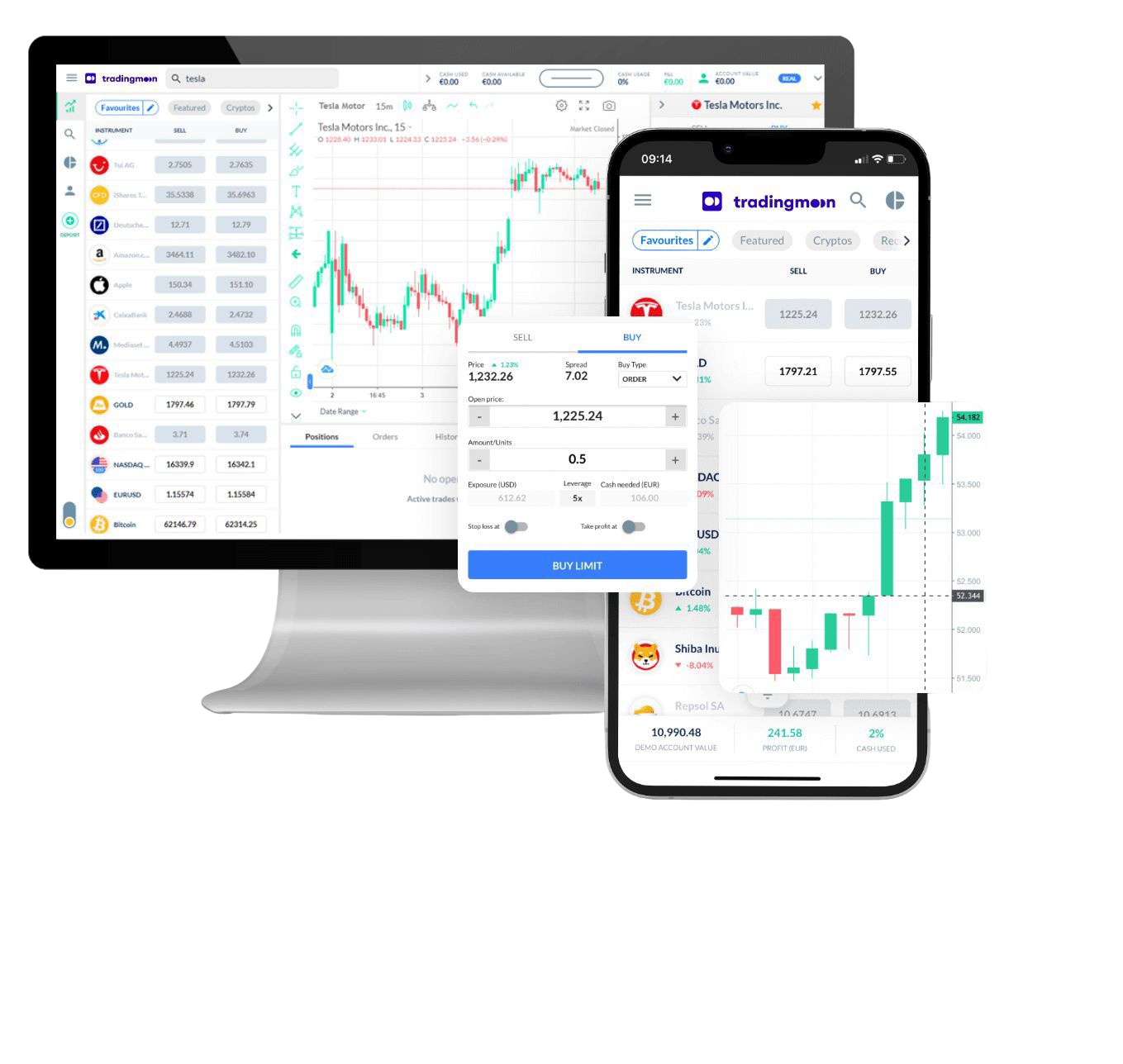
Търгувай [[data.name]] с TradingMoon
Заемете позиция в сектора на суровините! Диверсифицирайте с една единствена позиция.
- Търгувайте 24/5
- Тесни спредове
- Средно изпълнение за 5 мс
- Лесна за използване платформа
Защо да търгувате [[data.name]]
Възползвайте се максимално от ценовите колебания - независимо от посоката на движение на цената и без ограниченията, свързани с притежаването на базовия актив.
CFD
Реални суровини

Възползвайте се от покачващите се цени (заемете дълга позиция)


Възползвайте се от падащите цени (заемете къса позиция)

Търгувайте с ливъридж

Търгувайте върху волатилността

Без комисионни
Само ниски спредове

Управлявайте риска с вградени инструменти
Възможност за задаване на нива за вземане на печалба и стоп лос