


[[ data.name ]]
[[ data.ticker ]]
[[ data.price ]] [[ data.change ]] ([[ data.changePercent ]]%)
Ниско: [[ data.low ]]
Високо: [[ data.high ]]
Финансовият пазар на памук
Пазарът на памук е значителен участник в по-широкия сектор на меките суровини. Подобно на другите суровини, цените на памука се влияят от глобални икономически фактори, включително търсене и предлагане, метеорологични условия и тенденции на финансовия пазар. Глобалният пазар на памук се движи основно от фючърсния пазар, където трейдъри спекулират относно ценовите движения на памука. Фючърсите на памук обикновено се търгуват на борси, като Intercontinental Exchange (ICE), а тези контракти представляват ангажимент за покупка или продажба на памук на предварително определена цена на бъдеща дата. Този механизъм осигурява ликвидност и предоставя ценообразуване, което е от решаващо значение както за трейдъри, производители, така и за земеделски стопани. Участниците на пазара включват земеделски производители, търговци на суровини и спекуланти, всички от които влияят на ценовите колебания на памука.
Финансовият пазар отчита нарастващ интерес към памука като инвестиция в суровина, особено поради връзката му с други сектори, като производство на облекло и по-широкия земеделски пазар. За инвеститори, желаещи да диверсифицират портфейлите си, разбирането на волатилността на пазара на памук, моделите за прогнозиране на цените и използването на калкулатор за цената на памука са важни инструменти за вземане на информирани решения.
Преглед на текущите тенденции в цената на памука
Цените на памука са изпитали колебания, движени от няколко фактора, като променящи се метеорологични модели, геополитически събития и глобално търсене. Например през 2024 г. цените на памука осцилират между нива на подкрепа и съпротива около 83 до 89 щ.д. за фунт. Този период на ценово движение предоставя ценна информация за инвеститори, обмислящи дали да купят памук, или да продадат памук. Спекулативни действия на пазара, като закупуването на памучни фючърси в очакване на ценови скокове, са допринесли за волатилността. Цените показват краткосрочни възходящи тенденции, движени от нарастващото търсене от страни като Китай, който е най-големият вносител на памук в света.
Графика на памук предоставя визуално представяне на тези колебания, което е съществен инструмент за пазарен анализ. Прегледайки исторически данни, човек може да идентифицира повтарящи се тенденции и да разработи стратегии за бъдещи ценови движения.
Текущи пазарни тенденции в цената на памука
Понастоящем пазарът на памук е във фаза, в която краткосрочните сигнали показват възможност за покупка, като цените на памука показват умерена, но стабилна възходяща тенденция. Въпреки че съществува известен риск, както показват малките дневни проценти на волатилност, общото пазарно настроение клони към оптимизъм, особено с нарастващото потребление на памук на развиващите се пазари.
Един от най-значимите аспекти на пазара на памук днес е неговата корелация с по-широките земеделски и текстилни пазари. Докато търсенето на памучни продукти нараства в страни като Индия и Китай, цените на памука имат тенденция да се повишават, макар че остават податливи на колебания поради външни фактори, като глобални метеорологични модели (суши, наводнения) и сътресения във веригата на доставки. Цените имат тенденция да скачат, когато метеорологични събития отрицателно засегнат добивите от памучните култури, особено в основни производителни страни като Съединените щати, Индия и Китай.
Освен това промени в текстилната индустрия, включително преходът към устойчив и органичен памук, могат да повлияят на пазарните тенденции. Този натиск към устойчивост е довел до търсене на памучни сортове с подобрен екологичен отпечатък, което би могло да повлияе на ценообразуването на памука в дългосрочен план.
Фактори, влияещи на цената на памука и пазара на памук
Няколко фактора влияят на цените на памука, вариращи от глобалната динамика на търсенето и предлагането до конкретни регионални условия.
- Метеорологични условия: Памучните култури са изключително чувствителни към климатичните промени. Суша в основен регион, произвеждащ памук, като Тексас или Индия, може значително да намали добива и да повиши цените поради ограничено предлагане.
- Глобално търсене: Памукът е основната суровина за текстилната индустрия. Следователно всяко увеличение на глобалното търсене на облекло, особено в развиващите се страни, може да повиши цените. От друга страна, икономическите забавяния или промените в потребителското поведение, като преходът към синтетични тъкани, могат да намалят търсенето и да понижат цените.
- Правителствени политики и субсидии: В основните страни, произвеждащи памук, правителствените политики, като ценова подкрепа и субсидии, могат да повлияят на предлагането и в крайна сметка на цената на памука. Тези политики могат да бъдат двуостър меч, тъй като могат да стабилизират цените в краткосрочен план, но също така могат да доведат до свръхпредлагане или ценови изкривявания с течение на времето.
- Валутни движения: Тъй като памукът се търгува глобално, валутните колебания, особено между щатския долар и други валути, като китайския юан, могат да повлияят на пазара. По-силен долар обикновено прави американския памук по-скъп за международни купувачи, което може да намали износа и да повлияе на цените.
Други свързани суровини, засегнати от ценовото движение на памука
Памукът е част от по-широка категория земеделски суровини, а ценовото му движение може да влияе и да бъде повлияно от други суровини.
- Текстилни и облекателни пазари: Най-прякото въздействие е върху текстилната и облекателната индустрия, които силно разчитат на памук. Колебанията в цените на памука могат да доведат до по-високи или по-ниски разходи за производителите и в крайна сметка да повлияят на цените на дребно за облеклото.
- Пшеница и соя: Тези култури често се отглеждат в същите региони, като памука, а метеорологичните условия, засягащи производството на памук, могат също да засегнат и други земеделски суровини, като пшеница и соя. Освен това промени в земеделските практики поради пазарните условия могат да доведат до промени в решенията за засаждане, влияейки на предлагането и цената на памука и неговите земеделски аналози.
- Естествени влакна: Цената на памука може също да повлияе на други естествени влакна, като вълна и лен. Когато цените на памука се повишат значително, производителите могат да търсят алтернативи, което може да повиши търсенето и цените на други влакна.
Заключение
Памукът остава една от най-важните земеделски суровини в световен мащаб. Цените се влияят от сложен набор от фактори, включително времето, пазарното търсене, правителствените политики и динамиката на финансовия пазар на фючърсната търговия с памук. Докато поглеждаме напред, следенето на тези фактори чрез инструменти, като търговска стратегия за памук или модел за прогнозиране на цената на памука, ще бъде от съществено значение за участниците на пазара. Разбирайки силите, оформящи цените на памука, и взаимовръзката му със свързаните пазари, инвеститорите и трейдърите могат по-добре да се ориентират във възходите и паденията на пазара на памук.
За тези, желаещи да навлязат по-дълбоко в анализа на цената на памука, калкулатор за цената на памука може да предостави полезна информация в реално време за информирано вземане на решения. Независимо дали сте производител, трейдър или земеделски стопанин, оставането в крак с тези тенденции е от решаващо значение за успеха на постоянно развиващия се пазар на памук.
| Суап дълъг | [[ data.swapLong ]] точки |
|---|---|
| Суап къс | [[ data.swapShort ]] точки |
| Спред мин | [[ data.stats.minSpread ]] |
| Спред средно | [[ data.stats.avgSpread ]] |
| Мин. размер на договора | [[ data.minVolume ]] |
| Мин. стъпка на размера | [[ data.stepVolume ]] |
| Комисионна и суап | Комисионна и суап |
| Ливъридж | Ливъридж |
| Търговски часове | Търговски часове |
* Предоставените спредове отразяват среднопретеглената във времето стойност. Въпреки че TradingMoon се стреми да предоставя конкурентни спредове през всички часове на търговия, клиентите следва да имат предвид, че те могат да варират и са зависими от текущите пазарни условия. Горепосоченото е предоставено само с индикативна цел. Препоръчваме на клиентите да проверяват важните новинарски съобщения в нашия Икономически календар, които могат да доведат до разширяване на спредовете, наред с други случаи.
Горепосочените спредове са приложими при нормални търговски условия. TradingMoon си запазва правото да променя горепосочените спредове съобразно пазарните условия съгласно "Общите условия".
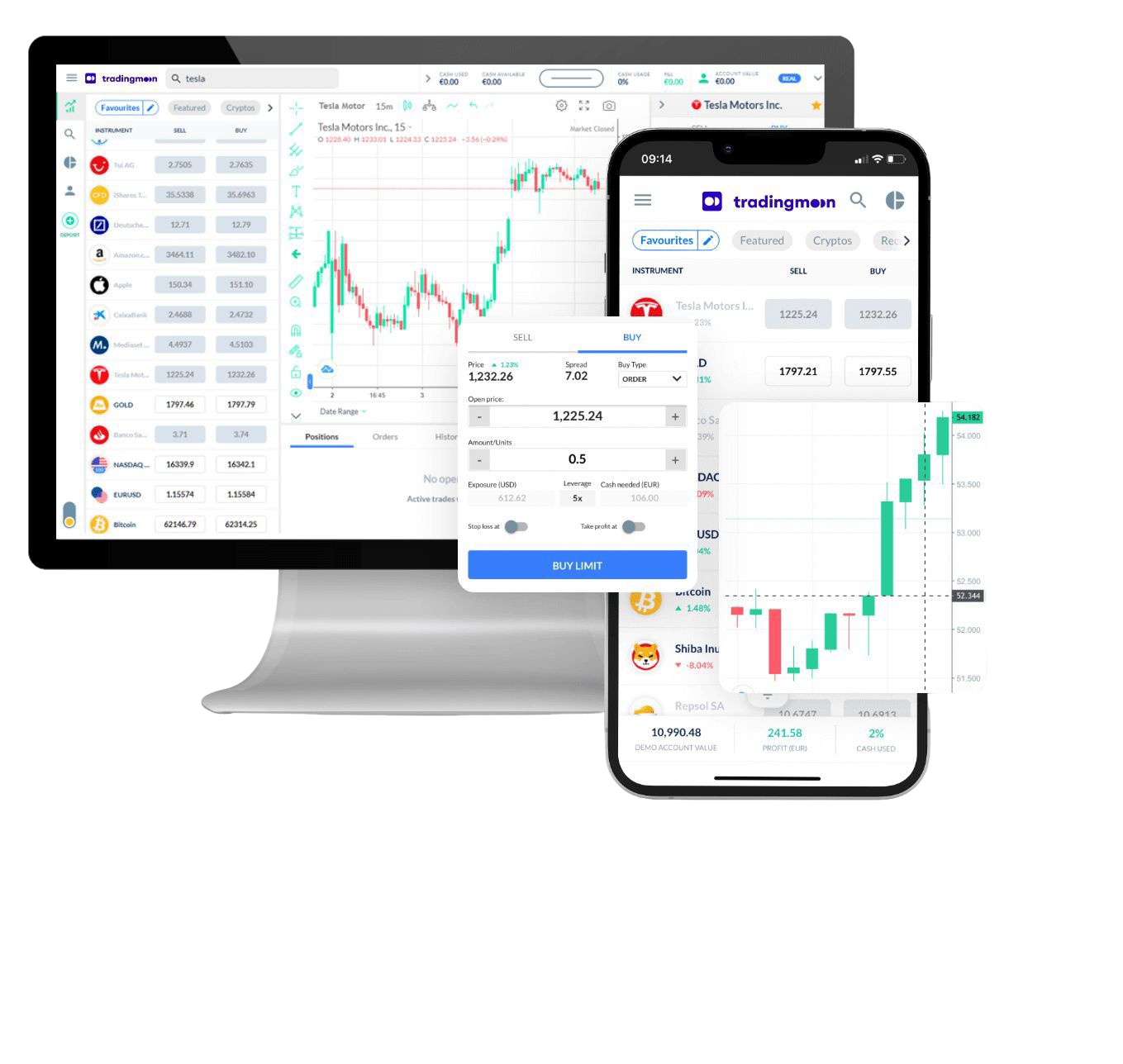
Търгувай [[data.name]] с TradingMoon
Заемете позиция в сектора на суровините! Диверсифицирайте с една единствена позиция.
- Търгувайте 24/5
- Тесни спредове
- Средно изпълнение за 5 мс
- Лесна за използване платформа
Защо да търгувате [[data.name]]
Възползвайте се максимално от ценовите колебания - независимо от посоката на движение на цената и без ограниченията, свързани с притежаването на базовия актив.
CFD
Реални суровини

Възползвайте се от покачващите се цени (заемете дълга позиция)


Възползвайте се от падащите цени (заемете къса позиция)

Търгувайте с ливъридж

Търгувайте върху волатилността

Без комисионни
Само ниски спредове

Управлявайте риска с вградени инструменти
Възможност за задаване на нива за вземане на печалба и стоп лос